Workflow before model
We start by mapping the owner, handoff, decision rule, source data, and risk boundary. AI is added only where it can move the work forward.
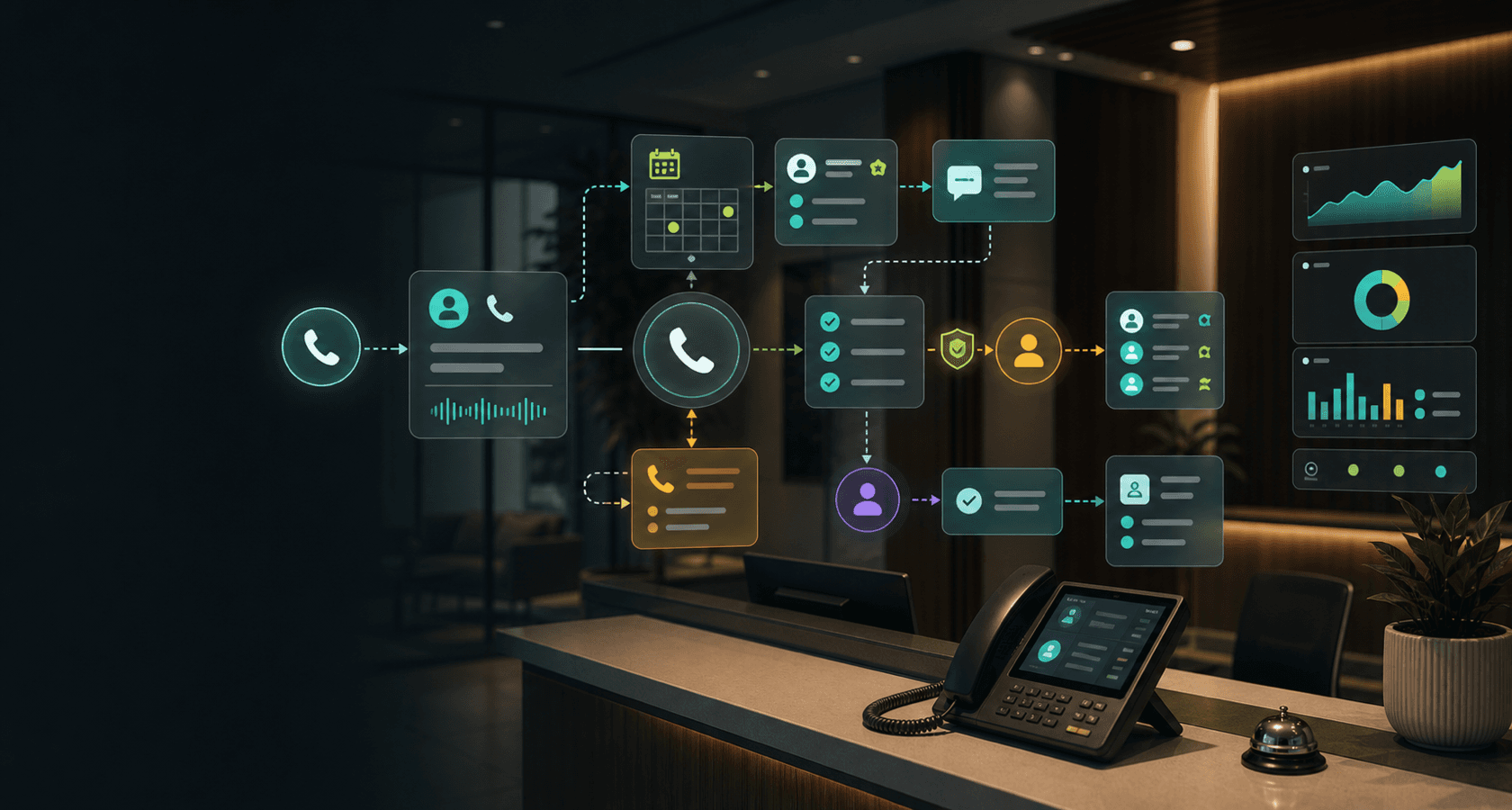
AI workflow automation consulting
We build two practical AI systems for businesses that lose calls, leads, and context: AI voice agent receptionists for customer calls, and business AI optimization for intake, documents, leads, and structured operating data.
Two offers
The site now focuses on two buyer-ready pages: voice agents for phone-heavy businesses, and business AI optimization for teams buried in non-voice intake and unstructured data.
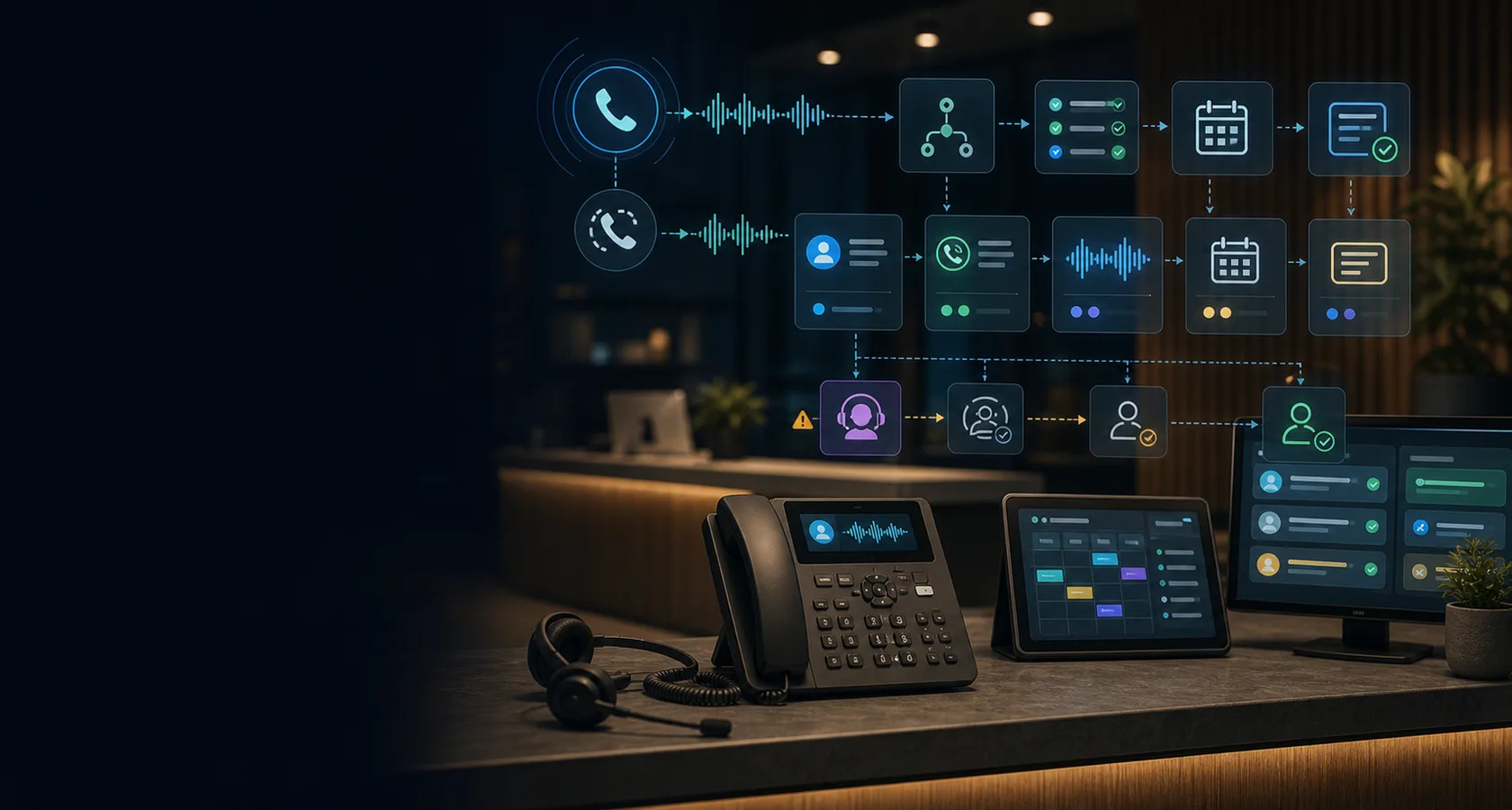 Voice agent integration
For clinics, med spas, home services, restaurants, auto shops, real estate offices, and service businesses that lose leads when nobody answers the phone.
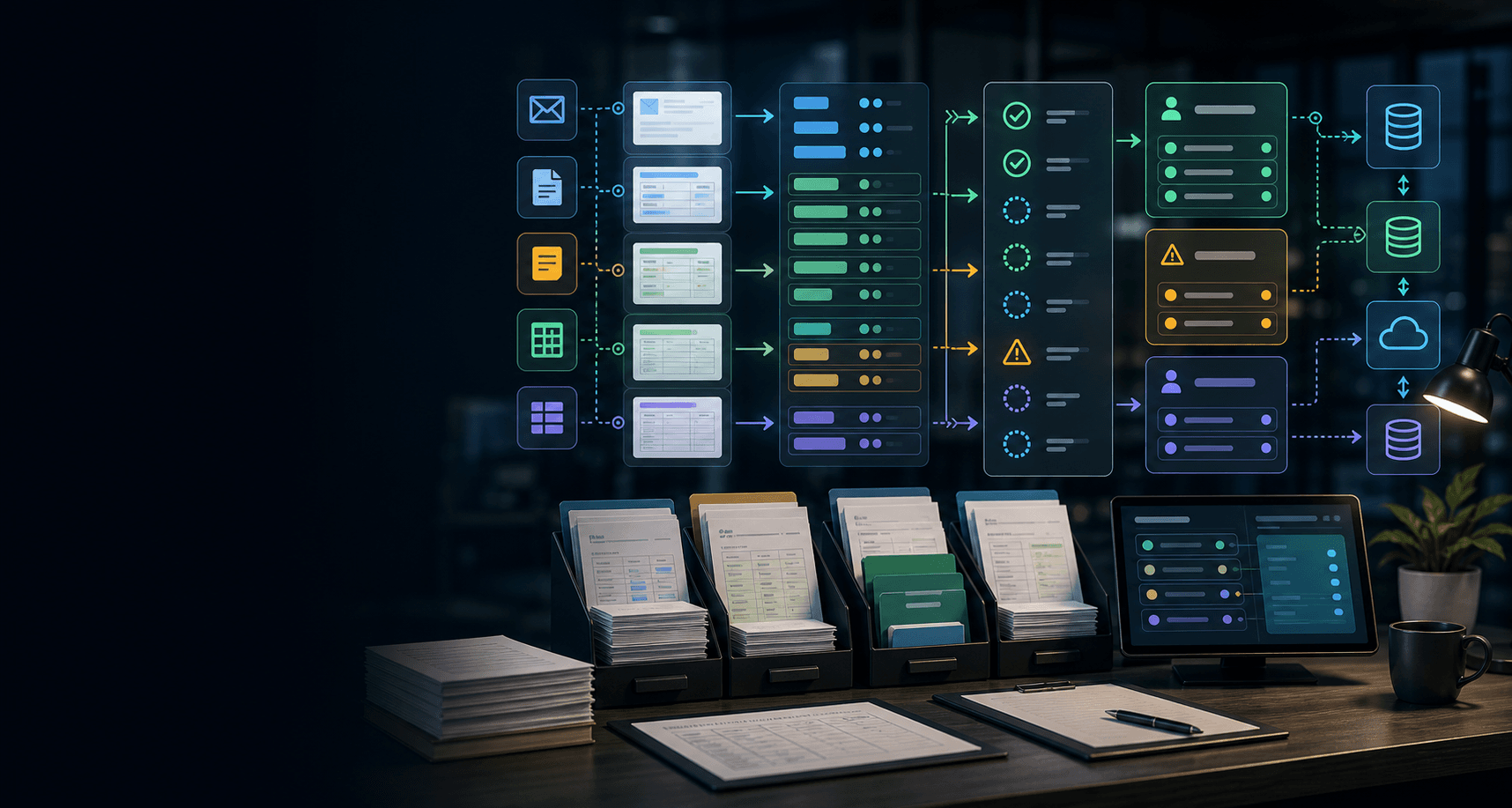 Business AI optimization
For teams drowning in forms, PDFs, email threads, duplicate leads, spreadsheet trackers, and unstructured customer or operations data.
Why this is believable
A good AI Workflow Automation Consulting project has an input, a job, a rule for when to ask a human, a destination system, and a metric. That is why business owners can trust the first pilot.
We start by mapping the owner, handoff, decision rule, source data, and risk boundary. AI is added only where it can move the work forward.
The system needs to land in the calendar, CRM, inbox, spreadsheet, database, or dispatch board your team already checks.
Urgent calls, risky updates, low-confidence extraction, and customer-impacting decisions can stay human-approved.
The first pilot is judged by missed-call recovery, response time, bookings, manual hours, data quality, and exception rate.
Examples
The first project should be easy for a customer to understand: fewer missed calls, cleaner intake, faster follow-up, and better data for people and AI.
The agent answers, qualifies the need, checks service rules, books a slot, and sends a summary to the owner.
Forms, emails, files, and notes become a clean record with urgency, fit, missing info, and next action.
PDFs and attachments are classified, extracted, confidence-scored, reviewed, and synced to the source of truth.
Measured results
We do not need a huge transformation program to prove value. We need one painful workflow, one owner, and a before-and-after view of the result.
How we build trust
Buyers do not need a huge menu of AI ideas. They need to know whether the first workflow is worth automating, where the AI is allowed to act, and what will prove it worked.
For voice agents, we check call reasons, booking rules, handoff moments, and escalation risk. For business AI, we check intake sources, document patterns, data destinations, reviewer roles, and the context needed before automation can be trusted.
We do not start with a broad AI roadmap. We choose the call, lead, document, or intake path that is already costing response time or revenue.
A useful system has to update the calendar, CRM, inbox, spreadsheet, database, or dispatch board your team already trusts.
Edge cases, low confidence extraction, urgent customers, and risky actions can route to a person before anything is sent or written back.
The pilot is judged by booked calls, faster lead response, cleaner records, hours removed, exception rate, and owner confidence.
FAQ
Short answers for owners deciding whether voice calls or business intake should be the first workflow.
AIWorkflow.icu builds practical AI workflow automation systems, especially AI voice agent receptionists for calls and business AI optimization for intake, documents, leads, and structured operating data.
Start with a voice agent when calls are being missed, repeated, or handled after hours. Start with business AI optimization when documents, leads, emails, forms, or spreadsheets are creating manual copy-paste and lost context.
We keep the first workflow narrow, connect it to the real system of record, add escalation rules, keep source evidence, route risky actions to humans, and measure the outcome before expanding.
ROI is measured through missed calls recovered, bookings created, lead response time, manual hours removed, data completeness, exception rate, and revenue or cycle-time impact.
Start Consultation
We will reply with a practical first scope: what to automate, where humans stay involved, and what result to measure.