Flagged change review
Wire, payoff, account, seller identity, email domain, urgency, or disbursement changes routed before action.
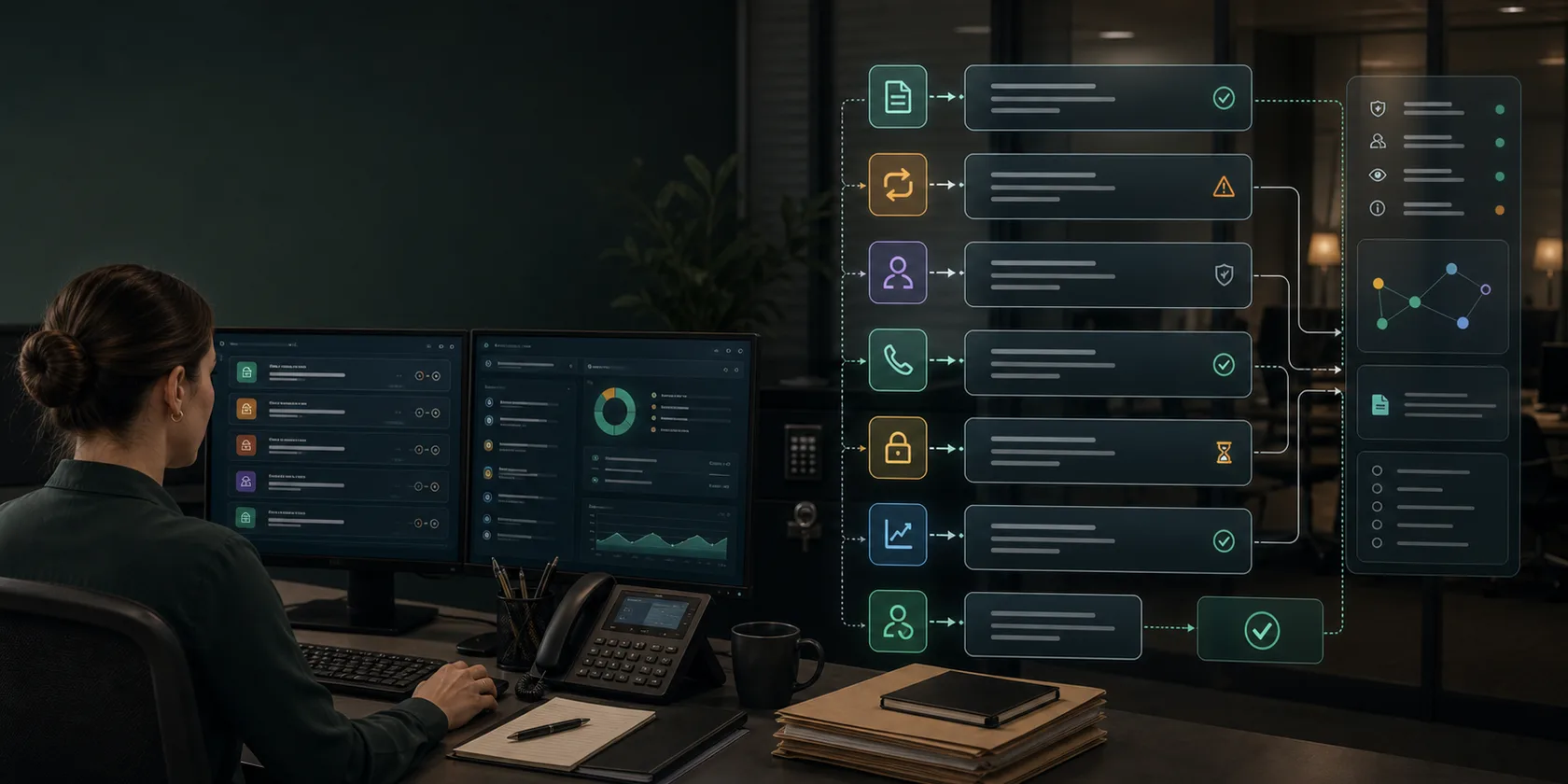
Title Companies use case
Build title company wire fraud review AI workflow automation for wire instruction changes, payoff updates, seller impersonation signals, call-back evidence, disbursement review, and audit logs.
Search intent
Wire-fraud review becomes fragile when wire instruction changes, payoff requests, seller identity evidence, agent emails, call-back notes, account updates, closing pressure, and disbursement tasks live in separate places.
Workflow design
The first project should be narrow, measurable, and tied to a clear approval boundary.
Collect risk signals: Gather wire instruction changes, payoff updates, seller identity evidence, email domain changes, urgency language, account mismatch, call-back notes, and prior file history.
Prepare review packet: Assemble source messages, document history, ID context, verification checklist status, callback evidence, and escalation notes for escrow review.
Hold money movement: Route wire instructions, payoff changes, disbursement requests, account updates, closing statement issues, and unusual identity signals for approval.
Audit review coverage: Track flagged changes, review time, callback completion, escalation outcomes, correction rate, and files with evidence attached.
Systems involved
The implementation plan starts by identifying source systems, owners, permissions, and the exact handoff AI is allowed to prepare.
ROI signals
Ranking the first workflow by ROI makes the page useful for buyers and clearer for search engines.
Wire, payoff, account, seller identity, email domain, urgency, or disbursement changes routed before action.
Review packets with source messages, documents, ID context, callback notes, account-change history, and reviewer actions attached.
Time from risk signal to completed callback, escalation, manager review, hold, or approved next step.
FAQ
Short answers for teams deciding whether this AI workflow is worth scoping.
AI should not be positioned as a fraud-prevention guarantee. It can help flag changes, gather evidence, and route review tasks while humans verify wire instructions, payoff changes, identity issues, and disbursement actions.
No. AI can prepare a review packet and surface change evidence, but wire instructions, account changes, payoff changes, and disbursements should stay locked behind human approval and company verification procedures.
Track flagged change review coverage, evidence completeness, callback completion, escalation speed, review cycle time, staff touches removed, and correction rate.
Services
Use-case research should connect to implementation support: workflow consulting, build scope, approval guardrails, and ROI validation.
AI workflow automation consulting for businesses that need workflow mapping, AI agent implementation, human approval guardrails, and measurable ROI reporting.
Workflow implementationAI Workflow Automation ImplementationAI workflow automation implementation for businesses ready to turn one mapped workflow into AI agents, integrations, approval queues, launch support, and ROI reporting.
Automation guardrailsAI Automation GuardrailsDesign AI automation guardrails for business workflows with approval rules, source evidence, audit logs, permissions, fallback handling, and exception queues.
ROI auditAI Workflow ROI AuditAI workflow ROI audit for businesses that need to identify the first automation pilot, estimate value, rank workflows, and avoid low-ROI AI projects.
Pricing path
The buying path should match the evidence available: start with consultation when the workflow is unclear, use an ROI audit when cost or readiness is uncertain, and move to a guarded pilot only when the owner, data, approvals, and baseline metrics are ready.
Implementation plan
We will review your current tools, map the approval boundary, and recommend whether this workflow is worth implementing first.