Repeated volume
The workflow happens often enough that cycle time, manual touches, or error reduction can be measured after launch.
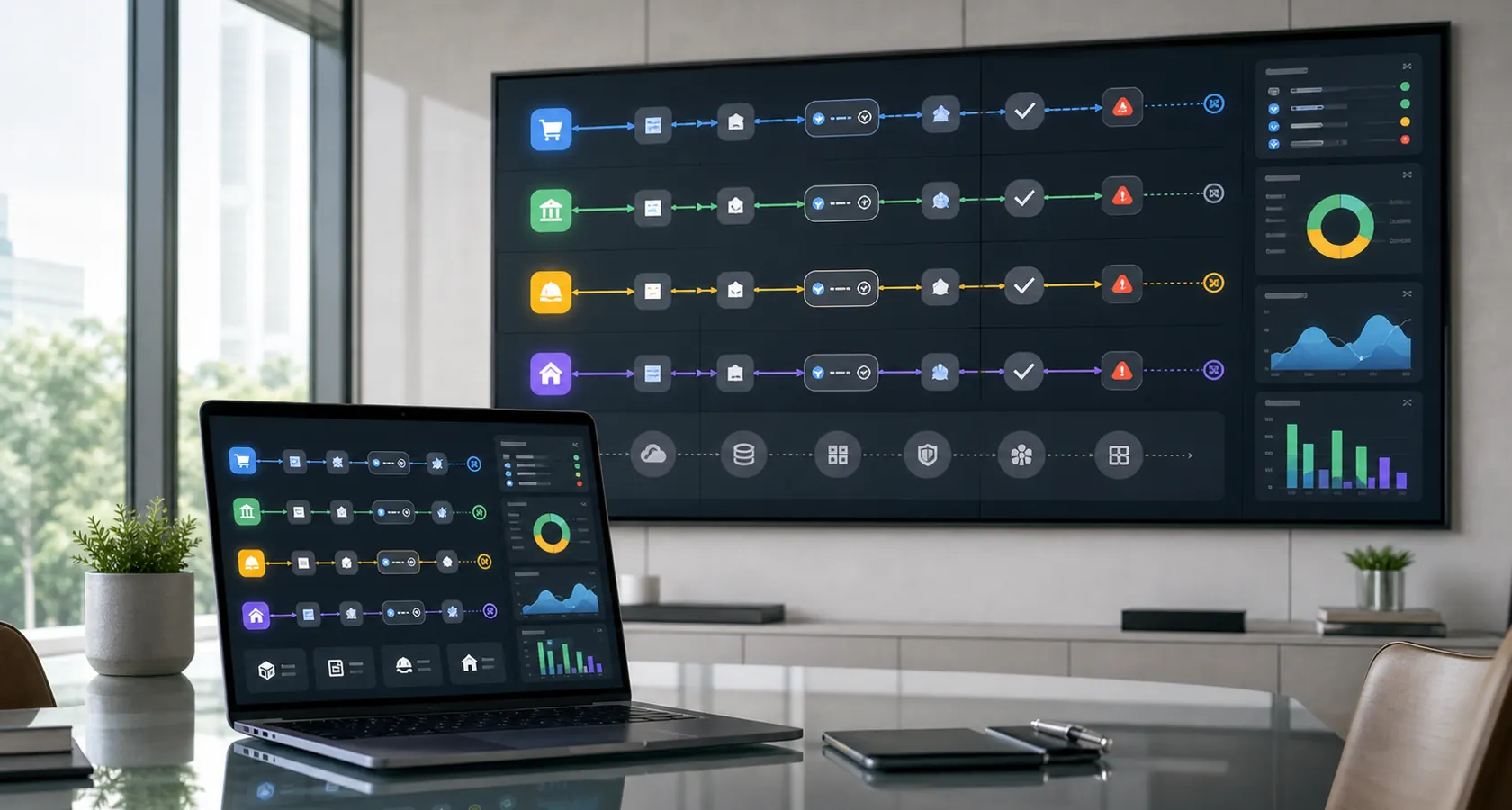
Implementation methodology
A guarded implementation process for businesses that need useful AI automation without losing control of approvals, records, customer trust, or ROI measurement.
How implementation works
The methodology is designed for traditional businesses where work is spread across inboxes, spreadsheets, CRMs, ERPs, helpdesks, documents, and people who still need approval control.
Workflow diagnosis: Map the current process, owners, systems, volume, handoffs, failure points, approval risk, and baseline metrics before choosing a tool.
Pilot selection: Rank candidate workflows by measurable pain, data readiness, implementation complexity, human approval clarity, and likely ROI.
Guardrail design: Write allowed actions, blocked actions, approval-required actions, source evidence rules, fallback paths, and audit logging requirements.
Agent implementation: Build the narrow workflow: intake, classification, drafting, routing, integrations, approval queues, dashboards, and monitoring.
ROI review: Compare the pilot against baseline hours, cycle time, exception rate, revenue impact, risk reduction, and team adoption before expanding.
Pilot criteria
The strongest starting point is rarely a broad AI program. It is one repeated workflow with enough context and ownership to prove value.
The workflow happens often enough that cycle time, manual touches, or error reduction can be measured after launch.
The source data lives in systems the business can connect, export, or review without breaking privacy and permission rules.
A person or team can approve risky outputs, resolve exceptions, and decide whether the workflow should expand.
The team can compare before and after metrics, not just rely on a demo or theoretical automation estimate.
Quality controls
The goal is not to let AI do everything. The goal is to remove preparation and routing drag while humans keep control over risky decisions.
Tools
Use the ROI calculator and readiness checklist before deciding whether a workflow is ready for implementation.
Estimate monthly net value, manual hours saved, payback period, and first-year net value for an AI workflow automation pilot.
Readiness checklistAI Workflow Readiness ChecklistScore whether a workflow is ready for AI automation based on ownership, volume, source systems, approval rules, fallback paths, and baseline metrics.
Services
Each service page maps back to workflow diagnosis, guarded implementation, and measurable ROI.
AI automation services for businesses that need workflow mapping, AI agent implementation, integrations, human approval guardrails, and ROI tracking.
Operations consultingAI Operations Automation ConsultingAI operations automation consulting for business teams that need intake routing, approvals, system handoffs, reporting, and measurable ROI.
Automation for businessAI Automation for BusinessAI automation for business teams that need practical workflow use cases, agent implementation, human approval guardrails, integrations, and measurable ROI.
Custom AI automationCustom AI Automation ServicesCustom AI automation services for business workflows, AI agents, integrations, approval guardrails, launch support, monitoring, and ROI.
Automation implementationAI Automation ImplementationAI automation implementation for business workflows: workflow design, AI agents, integrations, human approval queues, testing, launch support, and ROI reporting.
Workflow implementationAI Workflow Automation ImplementationAI workflow automation implementation for businesses ready to turn one mapped workflow into AI agents, integrations, approval queues, launch support, and ROI reporting.
Integration servicesAI Automation Integration ServicesAI automation integration services for connecting CRMs, ERPs, inboxes, documents, spreadsheets, APIs, approval queues, audit logs, and ROI dashboards.
Document processingAI Document Processing Automation ServicesAI document processing automation services for intake, classification, extraction, validation, review queues, system updates, audit logs, and ROI reporting.
Data extraction automationAI Data Extraction Automation ServicesAI data extraction automation services for PDFs, forms, emails, spreadsheets, field validation, exception queues, system handoffs, and ROI.
Contract automationAI Contract Automation ServicesAI contract automation services for contract intake, clause review packets, redline routing, approval queues, renewal follow-up, audit logs, and ROI.
Email automationAI Email Automation ServicesAI email automation services for inbox triage, reply drafts, routing, CRM updates, approval queues, audit logs, managed support, and ROI reporting.
Support automationAI Customer Support Automation ServicesAI customer support automation services for ticket triage, reply drafts, routing, knowledge lookup, escalation queues, CRM updates, QA, and ROI reporting.
Call center automationAI Call Center Automation ServicesAI call center automation services for agent assist, call summaries, routing, QA review, CRM handoffs, escalation, analytics, and ROI.
Chatbot automationAI Chatbot Automation ServicesAI chatbot automation services for website chat, support triage, lead capture, knowledge answers, CRM handoffs, human review, and ROI.
Knowledge base automationAI Knowledge Base Automation ServicesAI knowledge base automation services for SOPs, help articles, policy search, answer drafts, source citations, review queues, and ROI.
Sales lead automationAI Sales Lead Automation ServicesAI sales lead automation services for lead response, CRM enrichment, scoring, reply drafts, meeting handoffs, follow-up queues, guardrails, and ROI reporting.
Marketing automationAI Marketing Automation ServicesAI marketing automation services for campaign intake, audience routing, content drafts, lead handoffs, approvals, CRM updates, and ROI reporting.
Invoice automationAI Invoice Processing Automation ServicesAI invoice processing automation services for AP intake, PO matching, vendor checks, approval queues, exception routing, audit logs, and ROI reporting.
Billing automationAI Billing Automation ServicesAI billing automation services for billing queues, accounts receivable follow-up, payment status, disputes, refund review, approval routing, and ROI reporting.
Claims automationAI Claims Processing Automation ServicesAI claims processing automation services for claim intake, document review, evidence packets, fraud flags, denial routing, adjuster review, logs, and ROI.
Underwriting automationAI Underwriting Automation ServicesAI underwriting automation services for application intake, risk context, missing information, broker follow-up, reviewer queues, guardrails, and ROI.
Appointment schedulingAI Appointment Scheduling Automation ServicesAI appointment scheduling automation services for intake, reminders, calendar routing, rescheduling, waitlists, review queues, audit logs, and ROI reporting.
Voice agent automationAI Voice Agent Automation ServicesAI voice agent automation services for missed calls, phone intake, appointment booking, call summaries, CRM handoffs, escalation, and ROI.
AI receptionistAI Receptionist ServicesAI receptionist services for missed calls, phone answering, appointment booking, lead intake, call summaries, CRM handoffs, staff escalation, and ROI.
Order processingAI Order Processing Automation ServicesAI order processing automation services for order intake, quote requests, SKU checks, ERP drafts, exception routing, approval queues, audit logs, and ROI.
Inventory automationAI Inventory Automation ServicesAI inventory automation services for stock visibility, SKU exceptions, replenishment queues, cycle counts, receiving discrepancies, guardrails, and ROI.
Procurement automationAI Procurement Automation ServicesAI procurement automation services for purchase requests, vendor intake, quote comparison, approval routing, PO handoffs, audit logs, and ROI reporting.
Data entry automationAI Data Entry Automation ServicesAI data entry automation services for forms, documents, emails, CRM updates, ERP prep, validation, review queues, audit logs, and ROI reporting.
HR automationAI HR Automation ServicesAI HR automation services for candidate intake, employee onboarding, document collection, policy requests, approval queues, audit logs, and ROI reporting.
Payroll automationAI Payroll Automation ServicesAI payroll automation services for timecard review, payroll packets, deduction checks, exception routing, approval queues, audit logs, and ROI.
Client intake automationAI Client Intake Automation ServicesAI client intake automation services for inquiries, forms, document collection, missing details, screening, routing, reminders, reviews, and ROI reporting.
Approval workflowAI Approval Workflow Automation ServicesAI approval workflow automation services for review queues, evidence packets, routing rules, escalation, audit logs, exception handling, and ROI reporting.
CRM automationAI CRM Automation ServicesAI CRM automation services for lead updates, pipeline hygiene, notes, tasks, follow-up queues, enrichment, review controls, audit logs, and ROI reporting.
Quote automationAI Quote Automation ServicesAI quote automation services for quote requests, estimate packets, pricing checks, approval routing, follow-up queues, audit logs, and ROI reporting.
Automation agencyAI Automation AgencyAI automation agency for businesses that need workflow consulting, AI agent implementation, human approval guardrails, integrations, and ROI reporting.
Workflow agencyAI Workflow Automation AgencyAI workflow automation agency for businesses that need workflow mapping, AI agent builds, integrations, approval guardrails, launch support, and ROI measurement.
Automation companyAI Workflow Automation CompanyAI workflow automation company for businesses that need workflow mapping, AI agent builds, integrations, approval guardrails, launch support, and ROI measurement.
Automation consultantAI Automation ConsultantAI automation consultant for businesses that need workflow diagnosis, automation strategy, tool selection, guardrail planning, pilot scope, and ROI modeling.
Strategy consultingAI Automation Strategy ConsultingAI automation strategy consulting for businesses that need workflow priorities, tool guidance, guardrails, pilot scope, and an ROI roadmap.
Consulting servicesAI Automation Consulting ServicesAI automation consulting services for businesses that need workflow assessment, automation strategy, tool selection, guardrail planning, pilot scope, and ROI modeling before implementation.
Agent consultingAI Agent ConsultingAI agent consulting for businesses that need agent use-case selection, workflow scope, tool choice, human approval guardrails, implementation planning, and ROI modeling.
Small businessSmall Business AI AutomationSmall business AI automation for owners who need practical workflow help with support, sales follow-up, invoices, admin tasks, approvals, and ROI tracking.
Small business servicesAI Automation Services for Small BusinessAI automation services for small business teams that need workflow review, simple tools, guarded AI pilots, lead follow-up, inbox triage, admin automation, and ROI tracking.
Small business workflowsAI Workflow Automation for Small BusinessAI workflow automation for small business teams that need practical pilots for lead follow-up, inbox triage, document intake, approvals, and ROI tracking.
Small business consultantAI Automation Consultant for Small BusinessAI automation consultant for small business teams that need workflow diagnosis, practical AI use cases, guarded pilots, tool guidance, and ROI planning.
Workflow consultingAI Workflow Automation ConsultingAI workflow automation consulting for businesses that need workflow mapping, AI agent implementation, human approval guardrails, and measurable ROI reporting.
Workflow consultantAI Workflow Automation ConsultantAI workflow automation consultant for businesses that need a workflow-first advisor to choose the first automation, design guardrails, scope AI agents, and measure ROI.
Agent developmentAI Agent Development ServicesAI agent development services for custom workflow agents, tool access, integrations, approval queues, guardrails, testing, monitoring, and ROI.
Agent implementationAI Agent Implementation ServicesAI agent implementation services for business workflows: intake, classification, drafting, routing, approval queues, integrations, logging, and performance monitoring.
Managed servicesAI Automation Managed ServicesAI automation managed services for monitoring agents, fixing workflow issues, tuning prompts, reviewing exceptions, maintaining integrations, and reporting ROI.
Process consultingAI Process Automation ConsultingAI process automation consulting for businesses that need workflow mapping, AI-assisted handoffs, approval rules, implementation scope, and measurable ROI.
Process automationAI Business Process Automation ServicesAI business process automation services for teams that need process mapping, workflow redesign, AI-assisted handoffs, approval guardrails, implementation, and ROI measurement.
Back office automationAI Back Office Automation ServicesAI back office automation services for finance, HR, documents, data entry, approvals, billing queues, system handoffs, audit logs, and ROI.
Administrative automationAI Administrative Automation ServicesAI administrative automation services for inbox triage, scheduling, forms, document collection, reminders, task routing, approvals, and ROI.
Reporting automationAI Reporting Automation ServicesAI reporting automation services for KPI dashboards, recurring reports, data checks, exception summaries, narrative drafts, approvals, and ROI.
Automation guardrailsAI Automation GuardrailsDesign AI automation guardrails for business workflows with approval rules, source evidence, audit logs, permissions, fallback handling, and exception queues.
Compliance automationAI Compliance Automation ServicesAI compliance automation services for evidence packets, policy checks, review queues, audit logs, exception routing, guardrails, and ROI.
Readiness assessmentAI Automation Readiness AssessmentAI automation readiness assessment for businesses that need workflow fit, data access, approvals, risk review, and pilot readiness before implementation.
Automation auditAI Automation AuditAI automation audit for businesses that need workflow readiness review, automation opportunities, data access checks, approval risk mapping, and first-pilot recommendations.
ROI auditAI Workflow ROI AuditAI workflow ROI audit for businesses that need to identify the first automation pilot, estimate value, rank workflows, and avoid low-ROI AI projects.
FAQ
Use these answers to understand the workflow-first process before scoping a consultation, audit, or guarded pilot.
The methodology starts by mapping one repeated workflow, ranking pilot fit, defining approval guardrails, implementing a narrow AI-assisted workflow, and measuring ROI before expansion.
Workflow diagnosis identifies owners, systems, handoffs, exceptions, approval risk, and baseline metrics before a team buys tools or gives an AI agent production access.
A first guarded pilot should usually stay narrow enough to validate in weeks, not months. The exact timeline depends on data readiness, integrations, review rules, and workflow complexity.
Expansion should wait until baseline metrics improve, reviewers trust the output, risky actions stay approved, exceptions are visible, and support effort is lower than the value created.
Methodology review
We can review your workflow, identify the first automation candidate, and decide whether it is ready for a guarded pilot.