Registration completion
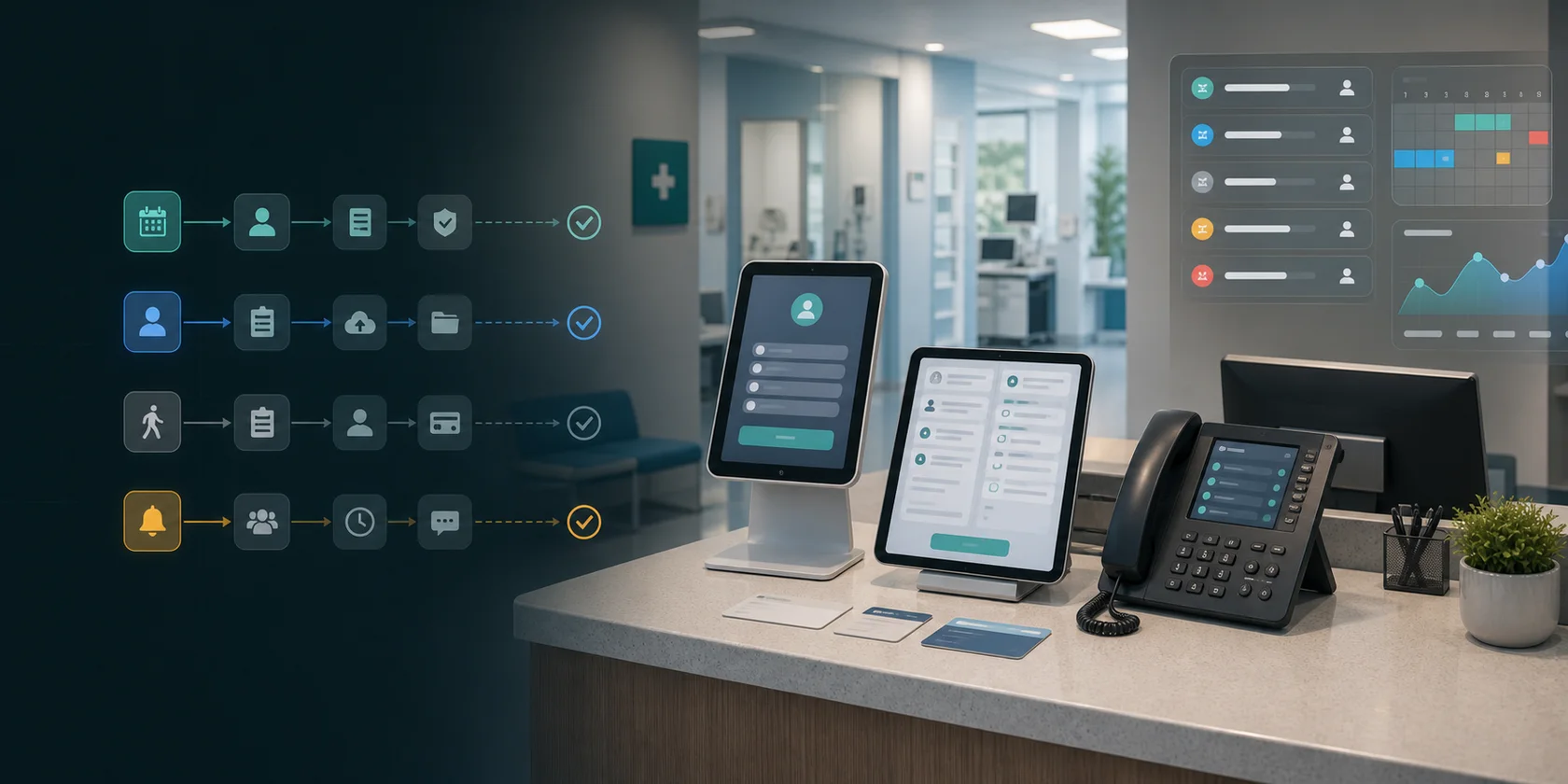
Walk-ins and reservations with demographics, consent, forms, insurance, visit reason, missing details, and next action prepared.
Urgent Care use case
Build urgent care online registration and scheduling AI workflow automation for walk-ins, reservations, intake forms, eligibility prep, waitlists, staff review, and ROI reporting.
Search intent
Same-day throughput slows down when walk-ins, online reservations, phone calls, kiosk intake, forms, demographics, consent, insurance cards, eligibility, visit reason, occupational medicine details, and missing information sit across disconnected systems.
Workflow design
The first project should be narrow, measurable, and tied to a clear approval boundary.
Classify visit request: Identify walk-in, online reservation, injury, illness, occupational medicine, school physical, lab, referral, payment, and document intent.
Prepare registration packet: Attach demographics, consent, forms, insurance, eligibility context, visit reason, preferred time, waitlist status, and missing information.
Route sensitive cases: Hold emergency language, clinical urgency, diagnosis, treatment questions, benefits interpretation, billing changes, refunds, and privacy-sensitive details for review.
Measure intake movement: Track registration completion, eligibility readiness, abandoned reservations, waitlist updates, missing-info closure, and correction rate.
Systems involved
The implementation plan starts by identifying source systems, owners, permissions, and the exact handoff AI is allowed to prepare.
ROI signals
Ranking the first workflow by ROI makes the page useful for buyers and clearer for search engines.
Walk-ins and reservations with demographics, consent, forms, insurance, visit reason, missing details, and next action prepared.
Arrival status, rooming context, estimated wait, schedule changes, occupational medicine details, and staff review tasks visible.
Insurance, eligibility status, benefit context, payer notes, missing information, payment question, and staff review tasks prepared before visit flow stalls.
FAQ
Short answers for teams deciding whether this AI workflow is worth scoping.
AI can classify requests, prepare intake packets, draft reviewed updates, and queue missing forms, but emergency triage, clinical questions, benefits promises, billing changes, and privacy-sensitive items should stay reviewed.
AI can prepare waitlist context and reviewed patient updates, but final wait-time promises, emergency escalation, rooming priority, and clinical urgency should remain staff-approved.
Track registration completion, abandoned reservation recovery, eligibility readiness, waitlist update speed, missing-info closure, staff touches removed, and correction rate.
Services
Use-case research should connect to implementation support: workflow consulting, build scope, approval guardrails, and ROI validation.
AI workflow automation consulting for businesses that need workflow mapping, AI agent implementation, human approval guardrails, and measurable ROI reporting.
Workflow implementationAI Workflow Automation ImplementationAI workflow automation implementation for businesses ready to turn one mapped workflow into AI agents, integrations, approval queues, launch support, and ROI reporting.
Automation guardrailsAI Automation GuardrailsDesign AI automation guardrails for business workflows with approval rules, source evidence, audit logs, permissions, fallback handling, and exception queues.
ROI auditAI Workflow ROI AuditAI workflow ROI audit for businesses that need to identify the first automation pilot, estimate value, rank workflows, and avoid low-ROI AI projects.
Pricing path
The buying path should match the evidence available: start with consultation when the workflow is unclear, use an ROI audit when cost or readiness is uncertain, and move to a guarded pilot only when the owner, data, approvals, and baseline metrics are ready.
Implementation plan
We will review your current tools, map the approval boundary, and recommend whether this workflow is worth implementing first.