Business workflow map
A clear view of the repeated process, owners, systems, manual touches, delays, exception paths, and decision points.
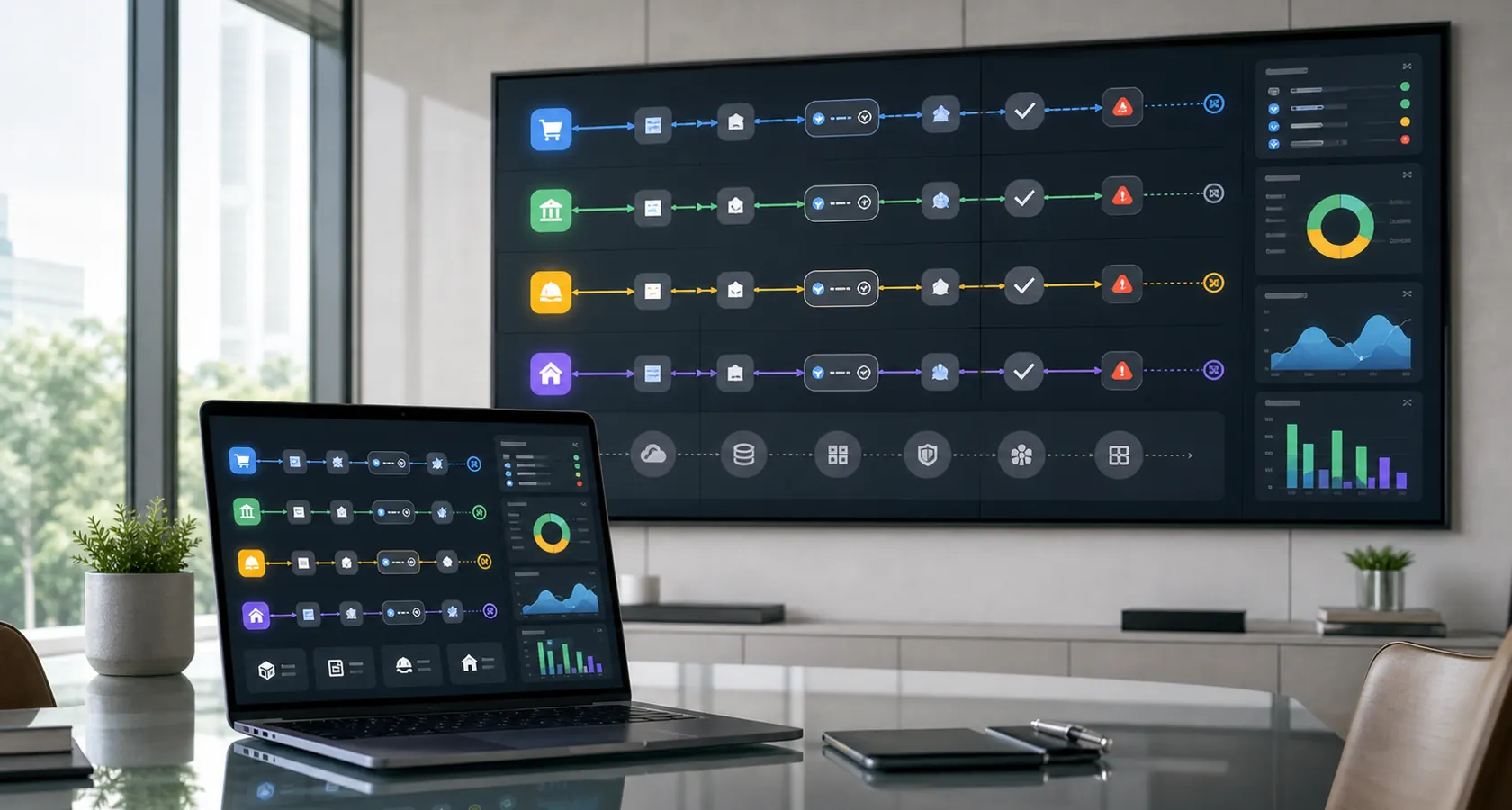
AI automation service
AI automation for business teams that need practical workflow use cases, agent implementation, human approval guardrails, integrations, and measurable ROI.
Buyer intent
Most businesses know AI could help somewhere, but the opportunity is usually scattered across inboxes, spreadsheets, CRMs, ERPs, support tools, documents, and approval threads. The first decision is not which model to use; it is which workflow is worth automating.
Deliverables
Every engagement is scoped around concrete work products, clear owners, and decisions your team can review.
A clear view of the repeated process, owners, systems, manual touches, delays, exception paths, and decision points.
A shortlist of workflows ranked by volume, pain, revenue impact, risk reduction, data readiness, and implementation complexity.
A narrow first pilot with agent responsibilities, integrations, approval rules, fallback handling, logging, and success metrics.
A measurement plan for hours saved, cycle time, errors, revenue recovered, exception rate, and whether to expand after launch.
Implementation path
Each service starts with the workflow, then narrows into data, approvals, implementation, and measurement.
Find business friction: Interview workflow owners and identify repeated work that causes delays, missed revenue, manual rework, or approval bottlenecks.
Choose one automation target: Select a workflow with enough volume, accessible data, clear ownership, and a human approval boundary for risky actions.
Build AI into the workflow: Use AI to classify, extract, draft, summarize, route, or assemble evidence while existing systems remain the source of record.
Measure before scaling: Compare the pilot against baseline metrics before adding more teams, systems, automations, or agent permissions.
Buyer checks
High-intent buyers should be able to compare scope, pricing, guardrails, and risk language before booking or approving implementation.
Before buying AI automation for business, confirm the exact workflow, owner, source systems, sample records, manual volume, and approval risk.
Separate consultation, audit, implementation, integrations, software, managed support, and change-request cost before comparing proposals.
Require allowed actions, blocked actions, approval-required decisions, source evidence, fallback paths, and audit logs before production launch.
Compare the proposal language against public AI risk, security, and implementation references without treating them as a substitute for expert review.
Fit and proof
Use these signals to decide whether a workflow has enough value, repeatability, and control points to automate.
Businesses with repeated operational work in sales, support, finance, operations, projects, admin, documents, or customer follow-up.
Teams looking for a broad AI transformation program before naming one workflow owner, baseline metric, or decision boundary.
One workflow becomes faster, easier to review, safer to approve, and visible enough for leadership to make the next investment decision.
FAQ
Short answers for buyers comparing AI automation options, risk, and implementation scope.
AI automation for business uses AI to prepare, classify, draft, route, summarize, or measure repeated operational work while humans approve risky customer, financial, compliance, or record-changing decisions.
Start with one repeated workflow that has clear ownership, accessible data, measurable pain, and a safe approval boundary, such as support triage, invoice prep, lead follow-up, document review, or CRM cleanup.
Measure ROI through manual hours removed, faster cycle time, fewer errors, recovered revenue, lower exception volume, improved approval speed, and the cost of implementation and support.
Decision support
Buyers can compare how the work is planned, priced, governed, and started before booking a consultation.
Workflow guides
Matched workflow pages help buyers see where this service turns into practical implementation.
Build AI email workflow automation for shared inbox triage, message classification, attachment context, reply drafts, owner routing, approval guardrails, and SLA reporting.
Approval OperationsAI Approval Workflow AutomationBuild AI approval workflow automation for request intake, risk scoring, approval packets, reviewer routing, audit logs, escalation rules, and ROI reporting.
SalesSales Lead Follow-Up AI Workflow AutomationBuild sales lead follow-up AI workflow automation for lead capture, CRM enrichment, scoring, reply drafts, meeting handoffs, approval guardrails, and ROI reporting.
Freight BrokersFreight Broker Carrier Sales AI Workflow AutomationBuild freight broker carrier sales AI workflow automation for load coverage, carrier outreach, compliance checks, lane notes, dispatcher review, and margin reporting.
Start scoped
The strongest first step is a narrow workflow with clear owners, accessible data, approval rules, and a measurable ROI baseline.