HubSpot fit
Use HubSpot when the workflow belongs inside CRM, marketing, sales, or service operations and internal owners can manage lists, records, workflows, permissions, and reporting.
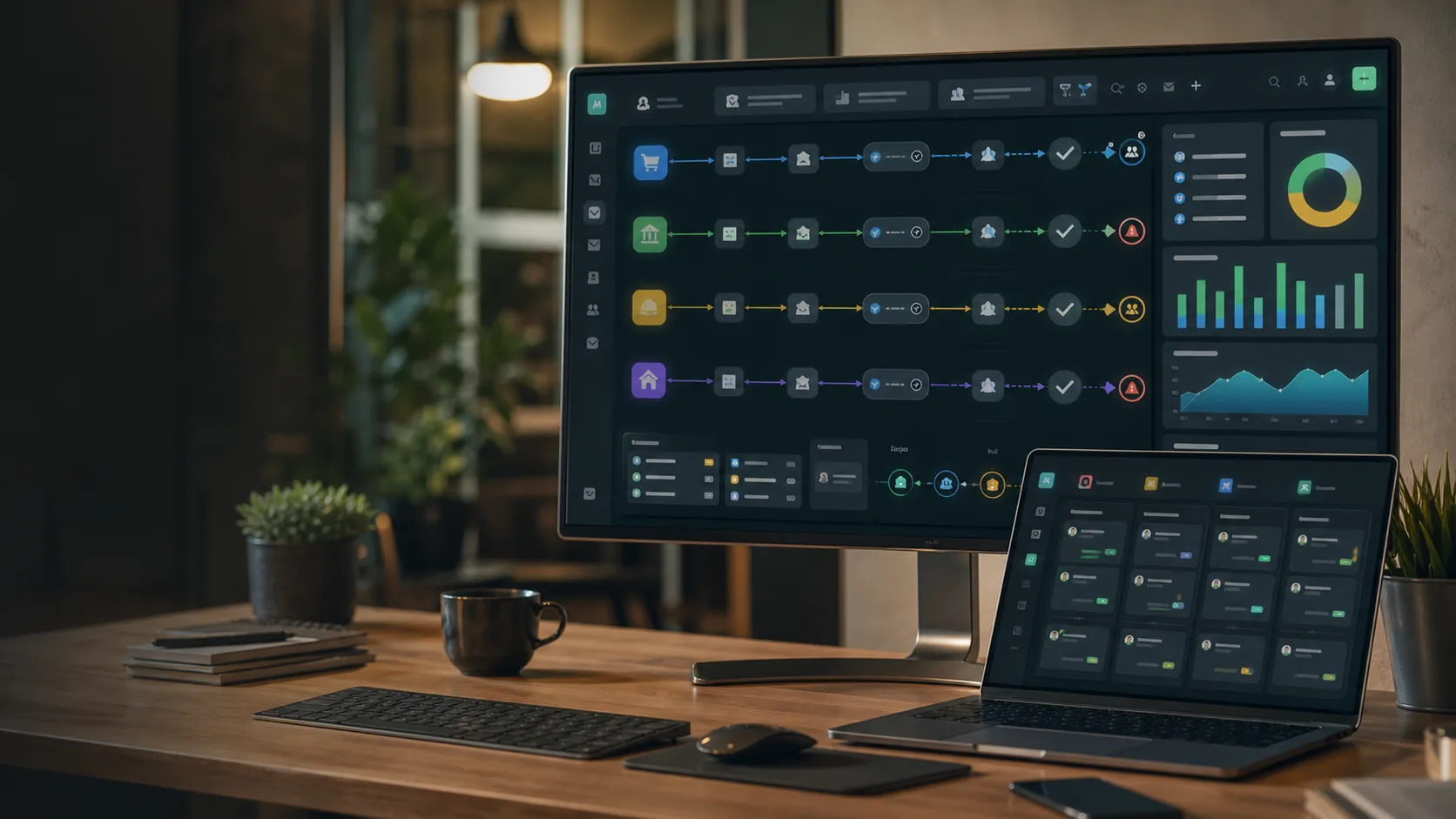
AI automation comparison
Compare AI automation services vs HubSpot for CRM automation, marketing workflows, sales follow-up, AI agents, approvals, support, and ROI.
Search intent
HubSpot is useful when the business wants CRM, marketing, sales, and service automation inside a customer platform with internal owners who can configure and govern it. AI automation services are useful when the workflow crosses HubSpot, email, forms, documents, billing, support tools, and approval queues and still needs diagnosis, integration planning, launch support, and ROI proof.
Decision framework
The best option depends on how the work arrives, which systems it touches, and which actions require human review.
Use HubSpot when the workflow belongs inside CRM, marketing, sales, or service operations and internal owners can manage lists, records, workflows, permissions, and reporting.
Use AI automation services when the workflow crosses systems, has messy inputs, needs custom AI agent roles, or requires human approval before customer messages or record changes happen.
A services engagement may still implement with HubSpot, but workflow scope, data access, approval rules, testing, and value metrics should be defined first.
The hidden risk is launching CRM or marketing automation before assigning owners for source evidence, customer commitments, list quality, field updates, exceptions, and ROI reporting.
Side-by-side
Use this table to choose a first pilot based on inputs, exceptions, approvals, integrations, and ROI proof.
Starts with workflow discovery, owner interviews, source systems, approval risk, CRM write-back boundaries, and ROI baseline.
Starts with HubSpot fit, CRM data quality, lists, forms, lifecycle stages, workflows, permissions, and internal admin capacity.
If the customer workflow depends on systems outside HubSpot, map the full process before automating.
Designs lead routing, activity summaries, follow-up tasks, campaign intake, CRM update packets, exception queues, and supervised write-back.
Can support CRM, marketing, sales, and service workflows, but the team still needs process rules, source evidence, testing, and adoption design.
Use services when HubSpot automation is part of a broader sales, service, billing, or operations workflow.
Creates human review gates for customer messages, pricing promises, legal-sensitive claims, duplicate merges, field overwrites, and account changes.
Needs careful permissions, list controls, workflow enrollment rules, escalation paths, and monitoring so automation does not create bad customer actions.
Keep customer-facing and permanent-record actions approval-gated until the workflow proves reliable.
Includes launch support, integration fixes, prompt or routing improvements, exception review, adoption support, and ROI reporting.
Works best when HubSpot owners can maintain workflows, review failures, govern changes, and prove pipeline or campaign value.
Compare total operating ownership, not only CRM or marketing automation features.
Checklist
A useful buying decision should reduce implementation risk and clarify the first measurable workflow.
FAQ
Short answers for buyers deciding which AI automation path fits their workflow.
Use HubSpot when the workflow belongs inside CRM, marketing, sales, or service operations and internal teams can govern records, workflows, lists, and reporting. Hire an AI automation service when the workflow needs mapping, cross-system integration, approval guardrails, testing, launch support, or ROI measurement.
Yes. A services provider may use HubSpot, HubSpot APIs, middleware, or custom integrations after the workflow, data access, approval rules, and support model are defined.
HubSpot may not be enough when the workflow has unclear ownership, messy inputs outside CRM, sensitive customer actions, custom AI evaluation, exception queues, audit needs, multi-system handoffs, or no internal support capacity.
No. This is an independent buyer guide for comparing workflow-first AI automation services with CRM and marketing automation platform options.
Compare options
Related decision guides help compare tools, agents, consulting, RPA, and workflow-first automation.
Compare AI automation services vs software for workflow mapping, integrations, AI agents, approval guardrails, implementation cost, and ROI proof.
Agency vs softwareAI Automation Agency vs SoftwareCompare an AI automation agency vs software for workflow mapping, implementation, integrations, approval guardrails, support, cost, and ROI proof.
Services vs ZapierAI Automation Services vs ZapierCompare AI automation services vs Zapier for business workflows, including tool setup, custom integrations, AI agents, approvals, monitoring, and ROI.
Services vs MakeAI Automation Services vs Make.comCompare AI automation services vs Make.com for business workflows, including scenario design, integrations, AI agents, approvals, monitoring, and ROI.
Services vs Power AutomateAI Automation Services vs Microsoft Power AutomateCompare AI automation services vs Microsoft Power Automate for business workflows, integrations, AI agents, approvals, governance, support, and ROI.
Services vs UiPathAI Automation Services vs UiPathCompare AI automation services vs UiPath for business workflows, RPA, AI agents, integrations, approvals, governance, support, and ROI.
Services vs Automation AnywhereAI Automation Services vs Automation AnywhereCompare AI automation services vs Automation Anywhere for agentic process automation, RPA, AI agents, approvals, governance, support, and ROI.
Services vs WorkatoAI Automation Services vs WorkatoCompare AI automation services vs Workato for enterprise integration, iPaaS, AI agents, approvals, governance, support, implementation risk, and ROI.
Services vs ServiceNowAI Automation Services vs ServiceNowCompare AI automation services vs ServiceNow for enterprise workflows, AI agents, IT and service operations, approvals, governance, support, and ROI.
Services vs n8nAI Automation Services vs n8nCompare AI automation services vs n8n for AI workflow automation, integrations, self-hosting, approvals, support, implementation risk, and ROI.
Services vs AgentforceAI Automation Services vs Salesforce AgentforceCompare AI automation services vs Salesforce Agentforce for AI agents, CRM automation, customer workflows, approvals, support, and ROI.
Services vs PegaAI Automation Services vs PegaCompare AI automation services vs Pega for enterprise process automation, workflows, case management, approvals, implementation support, and ROI.
AI vs RPAAI Workflow Automation vs RPACompare AI workflow automation vs RPA for business operations, including use cases, data needs, exception handling, human approvals, ROI, and implementation risk.
Agents vs workflowsAI Agents vs Workflow AutomationCompare AI agents vs workflow automation for business operations, including agent roles, orchestration, approvals, integrations, monitoring, and ROI.
Agents vs chatbotsAI Agents vs ChatbotsCompare AI agents vs chatbots for business workflows, support automation, tool use, human approval, integrations, monitoring, and ROI.
Consultant vs agencyAI Automation Consultant vs AgencyCompare an AI automation consultant vs agency for workflow strategy, tool selection, implementation support, guardrails, ROI, and ongoing optimization.
Consultant vs softwareAI Automation Consultant vs SoftwareCompare hiring an AI automation consultant vs buying software for workflow mapping, integrations, AI agents, approval guardrails, ROI reporting, and ongoing optimization.
Decision support
We will compare options against your real workflow, systems, approvals, and ROI target before recommending a build path.