Chatbot fit
Use a chatbot when the job is to answer common questions, collect details, qualify a request, book a simple next step, or hand off to a person.
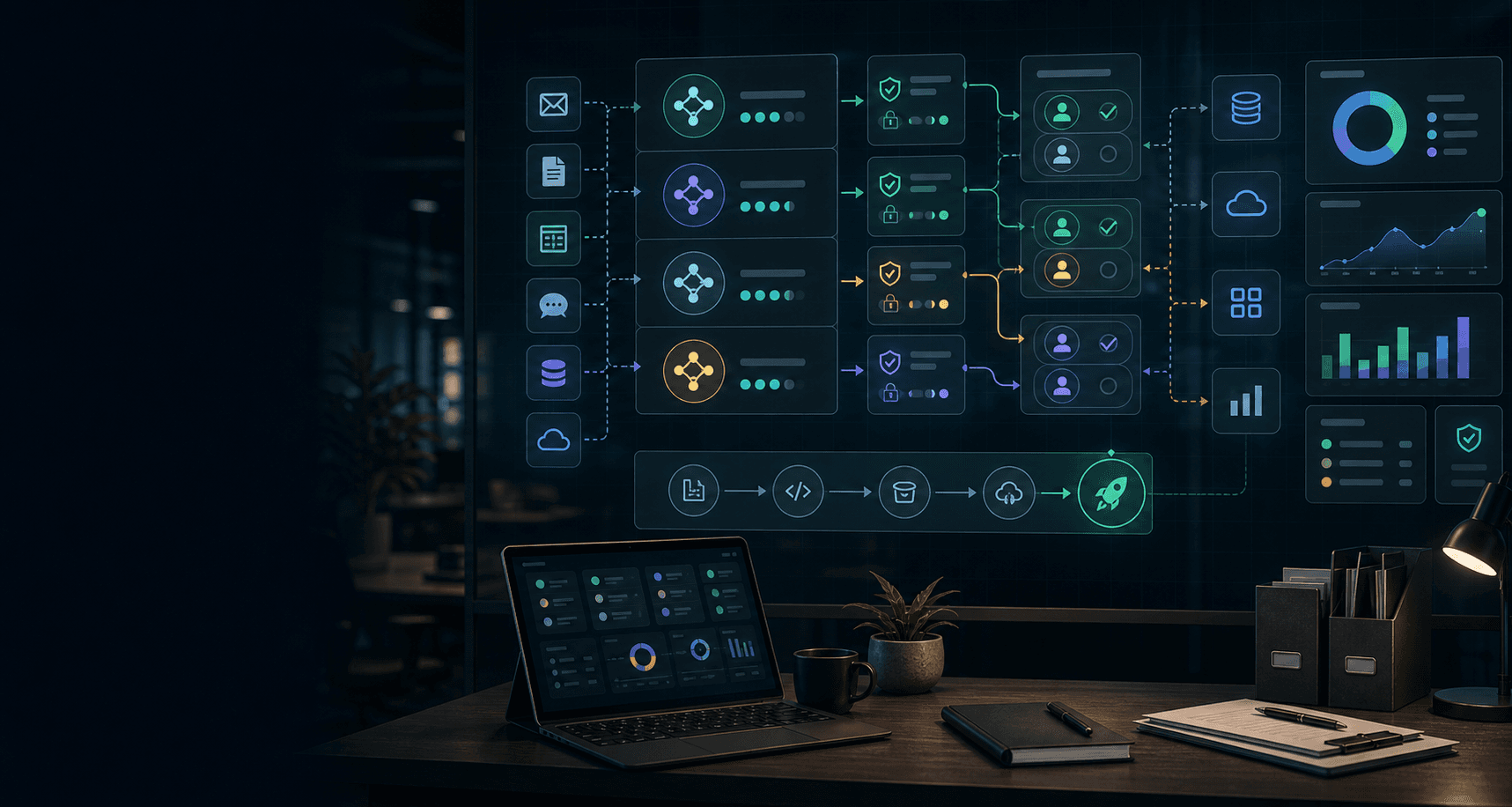
AI automation comparison
Compare AI agents vs chatbots for business workflows, support automation, tool use, human approval, integrations, monitoring, and ROI.
Search intent
A chatbot is usually best for answering, qualifying, and handing off within a defined conversation. An AI agent is useful when the work must use tools, inspect records, draft actions, route exceptions, and operate inside a broader guarded workflow.
Decision framework
The best option depends on how the work arrives, which systems it touches, and which actions require human review.
Use a chatbot when the job is to answer common questions, collect details, qualify a request, book a simple next step, or hand off to a person.
Use an AI agent when the job needs context from systems, multi-step reasoning, tool use, draft updates, exception handling, and approval-aware actions.
The jump from chatbot to agent increases value, but it also increases risk when the system can change records, send messages, or trigger business actions.
Start with the conversation and handoff, then add agent capabilities only where tool access, approvals, logs, and ROI metrics are clear.
Side-by-side
Use this table to choose a first pilot based on inputs, exceptions, approvals, integrations, and ROI proof.
Classifies intent, gathers context, drafts actions, uses tools, routes exceptions, and prepares work for review.
Answers questions, captures information, guides users through a script, and hands off when the path is unclear.
Use a chatbot for simple conversation coverage; use an agent when the work must move through systems.
May connect to CRM, helpdesk, scheduling, documents, inventory, billing, or internal knowledge with scoped permissions.
Often uses a knowledge base, form fields, booking rules, or a limited handoff path.
More access means more need for least-privilege permissions and approval rules.
Should pause for approval before refunds, account changes, customer commitments, compliance-sensitive replies, or permanent record updates.
Usually escalates to a person when the conversation leaves known answers or scripted intake.
Do not give an agent action authority until the approval boundary is explicit.
Measures work completed, manual prep removed, exception rate, review acceptance, cycle time, and revenue or retention impact.
Measures deflection, lead capture, booking completion, response time, and handoff quality.
Choose the metric that reflects the business process, not only the chat volume.
Checklist
A useful buying decision should reduce implementation risk and clarify the first measurable workflow.
FAQ
Short answers for buyers deciding which AI automation path fits their workflow.
A chatbot mainly manages a conversation. An AI agent can also use tools, inspect context, draft actions, route exceptions, and operate inside a workflow with approvals and logs.
Start with a chatbot when the need is common questions, intake, qualification, booking, or handoff. Start with an agent when the business process needs system context, tool use, multi-step work, review queues, and measurable operational outcomes.
They can be riskier when connected to tools or records. The risk is manageable when scope, permissions, source evidence, approval rules, fallback handling, audit logs, and monitoring are designed before launch.
Yes. A common path is to begin with conversation intake and handoff, then add agent capabilities such as CRM lookup, ticket drafts, scheduling preparation, summary generation, and approval-gated updates.
Compare options
Related decision guides help compare tools, agents, consulting, RPA, and workflow-first automation.
Compare AI automation services vs software for workflow mapping, integrations, AI agents, approval guardrails, implementation cost, and ROI proof.
Agency vs softwareAI Automation Agency vs SoftwareCompare an AI automation agency vs software for workflow mapping, implementation, integrations, approval guardrails, support, cost, and ROI proof.
Services vs ZapierAI Automation Services vs ZapierCompare AI automation services vs Zapier for business workflows, including tool setup, custom integrations, AI agents, approvals, monitoring, and ROI.
Services vs MakeAI Automation Services vs Make.comCompare AI automation services vs Make.com for business workflows, including scenario design, integrations, AI agents, approvals, monitoring, and ROI.
Services vs Power AutomateAI Automation Services vs Microsoft Power AutomateCompare AI automation services vs Microsoft Power Automate for business workflows, integrations, AI agents, approvals, governance, support, and ROI.
Services vs UiPathAI Automation Services vs UiPathCompare AI automation services vs UiPath for business workflows, RPA, AI agents, integrations, approvals, governance, support, and ROI.
Services vs Automation AnywhereAI Automation Services vs Automation AnywhereCompare AI automation services vs Automation Anywhere for agentic process automation, RPA, AI agents, approvals, governance, support, and ROI.
Services vs WorkatoAI Automation Services vs WorkatoCompare AI automation services vs Workato for enterprise integration, iPaaS, AI agents, approvals, governance, support, implementation risk, and ROI.
Services vs ServiceNowAI Automation Services vs ServiceNowCompare AI automation services vs ServiceNow for enterprise workflows, AI agents, IT and service operations, approvals, governance, support, and ROI.
Services vs n8nAI Automation Services vs n8nCompare AI automation services vs n8n for AI workflow automation, integrations, self-hosting, approvals, support, implementation risk, and ROI.
Services vs AgentforceAI Automation Services vs Salesforce AgentforceCompare AI automation services vs Salesforce Agentforce for AI agents, CRM automation, customer workflows, approvals, support, and ROI.
Services vs HubSpotAI Automation Services vs HubSpotCompare AI automation services vs HubSpot for CRM automation, marketing workflows, sales follow-up, AI agents, approvals, support, and ROI.
Services vs PegaAI Automation Services vs PegaCompare AI automation services vs Pega for enterprise process automation, workflows, case management, approvals, implementation support, and ROI.
AI vs RPAAI Workflow Automation vs RPACompare AI workflow automation vs RPA for business operations, including use cases, data needs, exception handling, human approvals, ROI, and implementation risk.
Agents vs workflowsAI Agents vs Workflow AutomationCompare AI agents vs workflow automation for business operations, including agent roles, orchestration, approvals, integrations, monitoring, and ROI.
Consultant vs agencyAI Automation Consultant vs AgencyCompare an AI automation consultant vs agency for workflow strategy, tool selection, implementation support, guardrails, ROI, and ongoing optimization.
Consultant vs softwareAI Automation Consultant vs SoftwareCompare hiring an AI automation consultant vs buying software for workflow mapping, integrations, AI agents, approval guardrails, ROI reporting, and ongoing optimization.
Decision support
We will compare options against your real workflow, systems, approvals, and ROI target before recommending a build path.