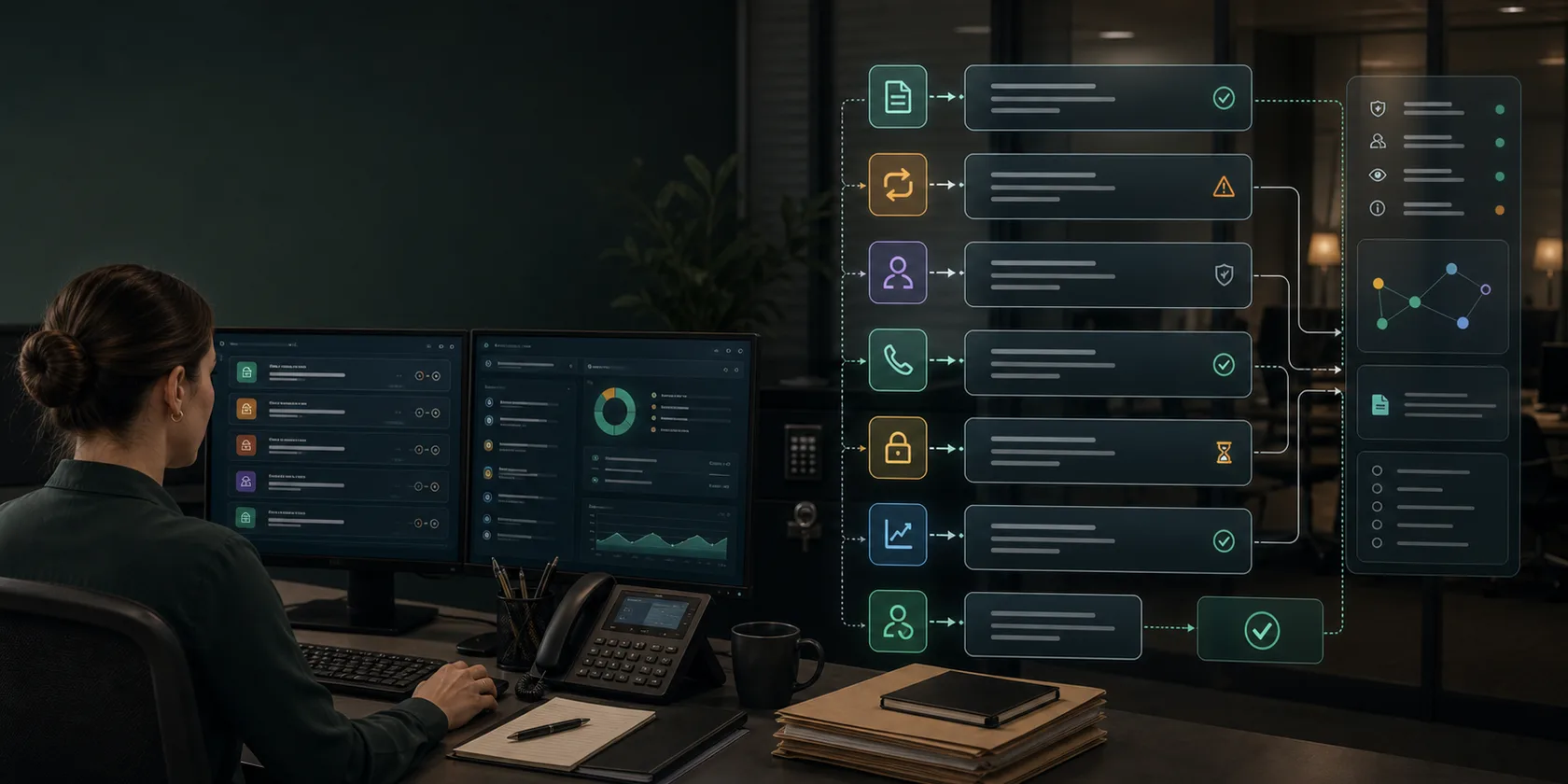
Approval workflow map
Define request sources, approval types, reviewer roles, evidence requirements, decision limits, SLA rules, escalation paths, and the system of record.
AI automation service
AI approval workflow automation services for review queues, evidence packets, routing rules, escalation, audit logs, exception handling, and ROI reporting.
Buyer intent
Approval work stalls when requests arrive through email, forms, tickets, spreadsheets, documents, alerts, and chat without clear owner, evidence, risk level, or SLA. Teams lose time deciding who should review the request, whether facts are missing, and what source context supports the decision.
Deliverables
Every engagement is scoped around concrete work products, clear owners, and decisions your team can review.
Define request sources, approval types, reviewer roles, evidence requirements, decision limits, SLA rules, escalation paths, and the system of record.
Assemble source documents, system records, prior messages, policy rules, confidence signals, missing fields, risk flags, and reviewer-ready summaries.
Route approvals by risk, amount, customer impact, policy exception, owner, urgency, and reviewer availability while escalating stale or sensitive requests.
Track approval cycle time, bottlenecks, exception rate, reviewer load, overdue approvals, correction patterns, decision logs, and manual effort removed.
Implementation path
Each service starts with the workflow, then narrows into data, approvals, implementation, and measurement.
Choose one approval queue: Start with one repeated queue such as payment review, estimate approval, refund approval, contract review, claims review, customer exceptions, or account changes.
Define decision limits: Separate what AI can prepare from what people must approve, including money movement, commitments, contracts, customer messages, and permanent records.
Connect evidence safely: Use least-privilege access to inboxes, forms, tickets, CRM, ERP, documents, policy sources, approval tools, and dashboards needed for review packets.
Tune from approval data: Use reviewer edits, overrides, missed evidence, bad routes, escalation patterns, and cycle-time bottlenecks to improve packet quality and routing.
Buyer checks
High-intent buyers should be able to compare scope, pricing, guardrails, and risk language before booking or approving implementation.
Before buying AI approval workflow automation services, confirm the exact workflow, owner, source systems, sample records, manual volume, and approval risk.
Separate consultation, audit, implementation, integrations, software, managed support, and change-request cost before comparing proposals.
Require allowed actions, blocked actions, approval-required decisions, source evidence, fallback paths, and audit logs before production launch.
Compare the proposal language against public AI risk, security, and implementation references without treating them as a substitute for expert review.
Fit and proof
Use these signals to decide whether a workflow has enough value, repeatability, and control points to automate.
The team repeatedly reviews similar requests and can define approvers, risk tiers, required evidence, decision limits, and measurable cycle-time pain.
The approval work is rare, completely judgment-only, politically unclear, ownerless, or the business wants AI to approve sensitive actions without review.
Approvers receive cleaner packets, risky cases route faster, missing evidence is visible earlier, and decisions become easier to audit.
FAQ
Short answers for buyers comparing AI automation options, risk, and implementation scope.
AI approval workflow automation services help teams capture requests, assemble evidence packets, route review queues, escalate exceptions, log decisions, and measure approval cycle time with human decision controls.
AI can prepare approval packets and routing recommendations, but payments, refunds, contracts, customer commitments, compliance decisions, and permanent record changes should remain human-approved.
Good candidates include payment review, refund approval, estimate approval, contract review, claims review, wire fraud review, account changes, customer exceptions, and policy exceptions.
Measure request volume, approval cycle time, overdue approvals, exception rate, reviewer load, routing accuracy, correction rate, audit readiness, and manual effort removed.
Decision support
Buyers can compare how the work is planned, priced, governed, and started before booking a consultation.
Workflow guides
Matched workflow pages help buyers see where this service turns into practical implementation.
Build AI approval workflow automation for request intake, risk scoring, approval packets, reviewer routing, audit logs, escalation rules, and ROI reporting.
InsuranceInsurance Claims AI Workflow AutomationBuild insurance claims AI workflow automation for claim intake, document collection, coverage context, fraud flags, adjuster routing, approval logs, and ROI reporting.
Title CompaniesTitle Company Wire Fraud Review AI Workflow AutomationBuild title company wire fraud review AI workflow automation for wire instruction changes, payoff updates, seller impersonation signals, call-back evidence, disbursement review, and audit logs.
Auto Repair ShopsAuto Repair Estimate Approval AI Workflow AutomationBuild auto repair estimate approval AI workflow automation for customer approval requests, declined-work follow-up, parts status, booking tasks, manager review, and ROI reporting.
Start scoped
The strongest first step is a narrow workflow with clear owners, accessible data, approval rules, and a measurable ROI baseline.