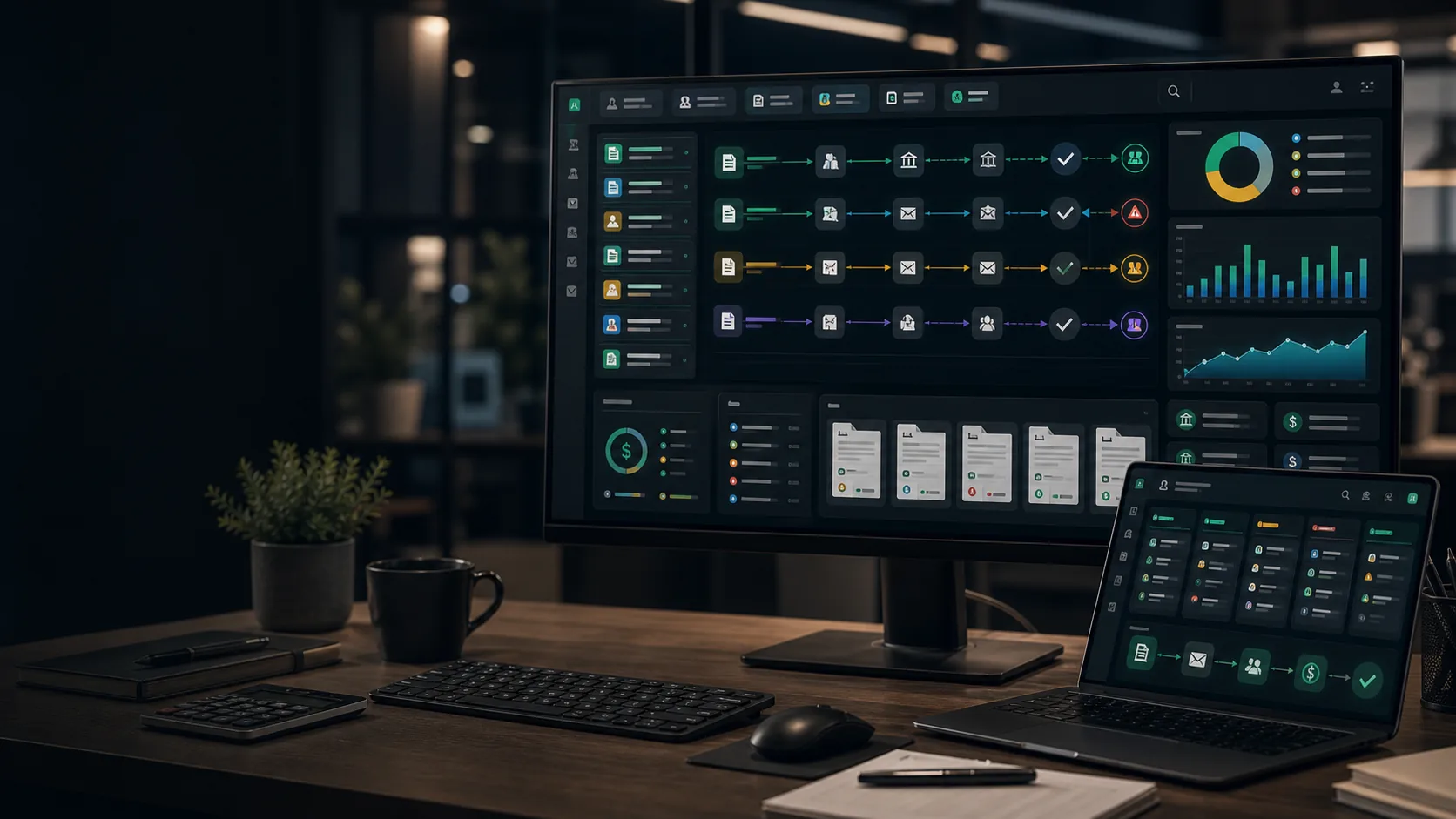
Billing workflow map
Define billing sources, account records, AR queues, payment statuses, dispute categories, refund rules, statement rules, owner roles, approval thresholds, and the billing system of record.
AI automation service
AI billing automation services for billing queues, accounts receivable follow-up, payment status, disputes, refund review, approval routing, and ROI reporting.
Buyer intent
Billing work slows down when customer invoices, payment status, AR aging, disputed charges, refunds, statements, payment plans, collections notes, payer follow-up, and account updates live across inboxes, billing tools, spreadsheets, CRMs, portals, and accounting systems. Teams lose cash flow visibility while staff chase context and approvals.
Deliverables
Every engagement is scoped around concrete work products, clear owners, and decisions your team can review.
Define billing sources, account records, AR queues, payment statuses, dispute categories, refund rules, statement rules, owner roles, approval thresholds, and the billing system of record.
Prepare invoice history, payment status, aging bucket, customer notes, dispute evidence, payer context, prior outreach, missing fields, and reviewer-ready follow-up packets.
Route billing disputes, credits, refunds, payment-plan exceptions, write-offs, customer-sensitive messages, and low-confidence account details to the mapped reviewer.
Track billing response time, AR follow-up coverage, dispute closure, payment-plan movement, refund approval latency, correction rate, recovered cash, and staff time removed.
Implementation path
Each service starts with the workflow, then narrows into data, approvals, implementation, and measurement.
Choose one billing queue: Start with one repeated queue such as billing questions, AR follow-up, payment status requests, disputed charges, refund review, customer statements, payer follow-up, or account updates.
Connect billing context: Use least-privilege access to billing systems, accounting tools, CRM, email, payment processors, portals, spreadsheets, statement templates, and approval matrices.
Set payment guardrails: Hold refunds, credits, write-offs, payment-plan changes, collection language, account holds, legal-sensitive messages, and permanent billing updates for review.
Measure cash movement: Review AR aging, response speed, accepted drafts, dispute cycle time, payment follow-up coverage, refund approvals, recovered cash, and manual touches removed.
Buyer checks
High-intent buyers should be able to compare scope, pricing, guardrails, and risk language before booking or approving implementation.
Before buying AI billing automation services, confirm the exact workflow, owner, source systems, sample records, manual volume, and approval risk.
Separate consultation, audit, implementation, integrations, software, managed support, and change-request cost before comparing proposals.
Require allowed actions, blocked actions, approval-required decisions, source evidence, fallback paths, and audit logs before production launch.
Compare the proposal language against public AI risk, security, and implementation references without treating them as a substitute for expert review.
Fit and proof
Use these signals to decide whether a workflow has enough value, repeatability, and control points to automate.
The team handles repeated billing questions, AR follow-up, payment status, disputes, refunds, or statement work and can define who approves sensitive account actions.
Billing volume is low, account records are unreliable, payment authority is unclear, refund rules are undocumented, or the business wants AI to collect money or issue refunds without review.
Billing packets are ready faster, customer follow-up is more consistent, disputes and refunds are easier to review, and payment-sensitive actions stay approval-gated.
FAQ
Short answers for buyers comparing AI automation options, risk, and implementation scope.
AI billing automation services help teams classify billing requests, prepare account context, draft reviewed follow-up, route disputes or refunds, prepare billing-system updates, and measure AR follow-up or cash collection movement.
AI can prepare payment follow-up and refund review packets, but refunds, credits, write-offs, collections language, payment-plan changes, and account-impacting updates should remain human-approved.
Good candidates include billing questions, AR follow-up, payment status requests, disputed charges, refund review, customer statements, payment-plan requests, payer follow-up, and account updates.
Measure billing response time, AR aging movement, payment follow-up coverage, dispute closure, refund approval latency, recovered cash, correction rate, and staff time removed.
Decision support
Buyers can compare how the work is planned, priced, governed, and started before booking a consultation.
Workflow guides
Matched workflow pages help buyers see where this service turns into practical implementation.
Build medical billing A/R follow-up AI workflow automation for claim status, payer follow-up, patient balances, payment plan tasks, write-off review, and ROI reporting.
Urgent CareUrgent Care Eligibility Claims and Lab Follow-Up AI Workflow AutomationBuild urgent care eligibility, claims, and lab follow-up AI workflow automation for payer packets, denials, payments, lab callbacks, referrals, patient messages, and ROI reporting.
Senior LivingAssisted Living Care Coordination and Billing AI Workflow AutomationBuild assisted living care coordination and billing AI workflow automation for family messages, resident tasks, incident follow-up, invoices, payments, staff review, and ROI reporting.
ChildcareDaycare Attendance Incident and Billing AI Workflow AutomationBuild daycare attendance AI workflow automation for check-in exceptions, absences, pickup notes, incident packets, parent updates, tuition billing, review queues, and ROI reporting.
Start scoped
The strongest first step is a narrow workflow with clear owners, accessible data, approval rules, and a measurable ROI baseline.