Faster first reply on return tickets.
Use this signal to validate whether the workflow improved after a guarded pilot.
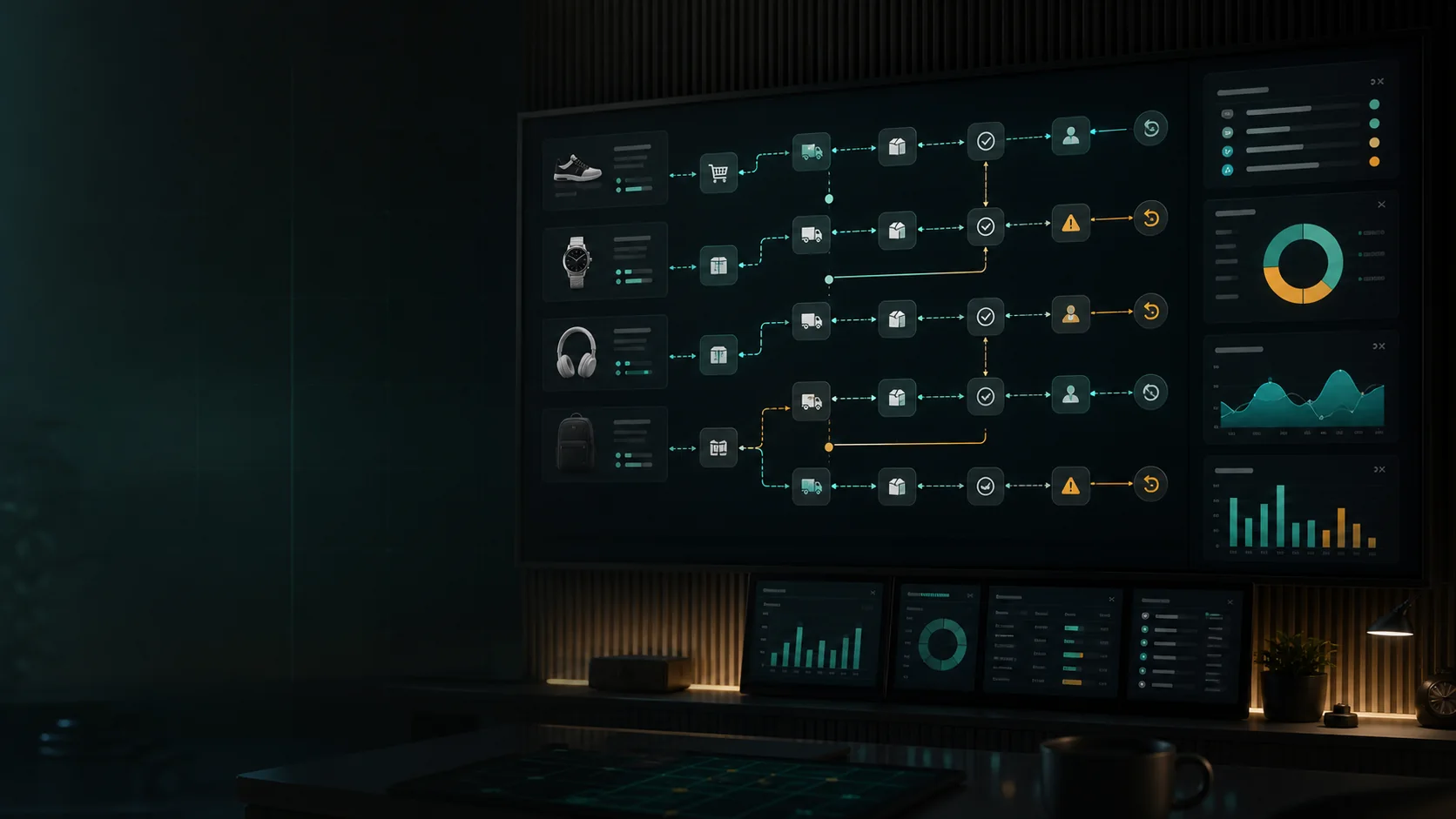
E-commerce case playbook
Returns desk that routes refunds, fraud flags, and customer updates.
Representative playbook
This case study is a representative workflow playbook, not a fabricated client claim. It shows how a buyer can scope the workflow before committing to implementation.
Workflow breakdown
The right first pilot should make the workflow easier to review, not harder to trust.
Problem: A store team spends hours checking order status, return windows, refund eligibility, and customer history before replying.
Automation: AI reads the return request, pulls order context, classifies the reason, drafts the reply, and routes refund-risk cases to a human queue.
Guardrail: Refunds, discounts, and chargeback-prone orders require staff approval before any customer message or money movement.
Outcome signals
A useful case study should name the operating signals to monitor before and after launch.
Use this signal to validate whether the workflow improved after a guarded pilot.
Use this signal to validate whether the workflow improved after a guarded pilot.
Use this signal to validate whether the workflow improved after a guarded pilot.
FAQ
A representative case study is useful only when the approval boundary, workflow volume, and measurable signals fit the real operation.
No. This is a representative e-commerce workflow playbook, not a fabricated client claim. It shows the pain, automation path, approval guardrail, and ROI signals to validate before implementation.
Confirm workflow volume, current systems, owner responsibilities, approval boundaries, exception patterns, and baseline metrics before building a guarded AI pilot.
Refunds, discounts, and chargeback-prone orders require staff approval before any customer message or money movement. Risky customer, financial, legal, operational, or brand-sensitive actions should stay reviewed until the workflow proves reliable.
Track faster first reply on return tickets., cleaner exception queue for support leads., better visibility into return reasons by product. before and after launch so the pilot is judged by measurable operating improvement.
Services
Connect the case study to workflow consulting, guarded implementation, approval controls, and ROI validation before building.
AI workflow automation consulting for businesses that need workflow mapping, AI agent implementation, human approval guardrails, and measurable ROI reporting.
Workflow implementationAI Workflow Automation ImplementationAI workflow automation implementation for businesses ready to turn one mapped workflow into AI agents, integrations, approval queues, launch support, and ROI reporting.
Automation guardrailsAI Automation GuardrailsDesign AI automation guardrails for business workflows with approval rules, source evidence, audit logs, permissions, fallback handling, and exception queues.
ROI auditAI Workflow ROI AuditAI workflow ROI audit for businesses that need to identify the first automation pilot, estimate value, rank workflows, and avoid low-ROI AI projects.
Next step
We will compare this playbook to your actual systems, owners, approval risks, and measurable baseline.