Ticket cycle time
Time from ticket arrival to first reviewed response by category.
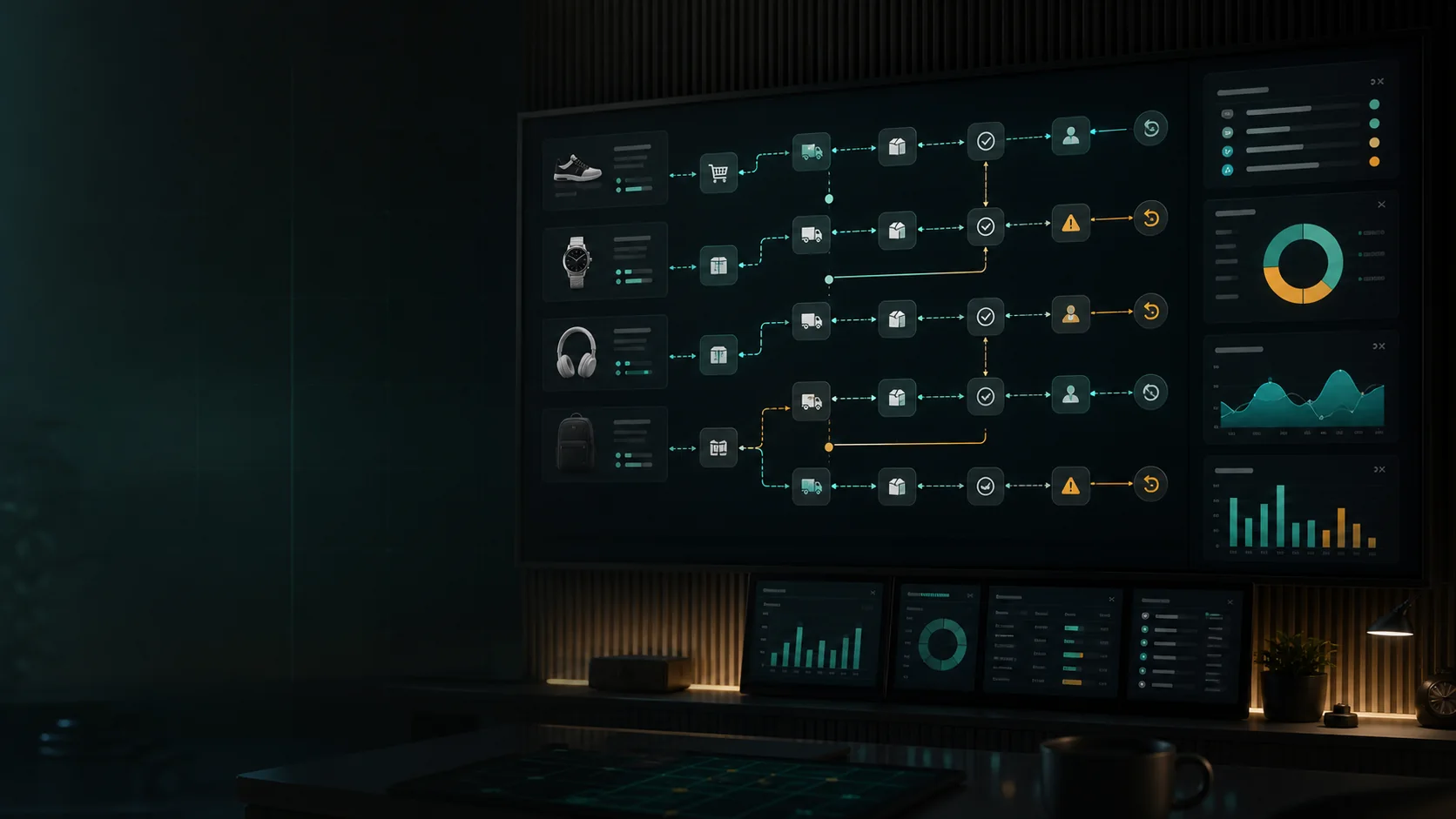
E-commerce use case
Use AI to triage e-commerce support tickets by shipping status, refunds, VIP customers, product questions, and exception risk before staff reply.
Search intent
Support queues slow down when every ticket looks equally urgent. Shipping questions, refund requests, VIP customers, product issues, and policy exceptions need different handling.
Workflow design
The first project should be narrow, measurable, and tied to a clear approval boundary.
Read and classify: Classify tickets by topic, urgency, customer segment, order status, and missing context.
Attach context: Pull order, shipping, product, return, and customer history into the helpdesk note.
Draft replies: Prepare response drafts in brand voice while separating safe replies from approval-required cases.
Route exceptions: Send VIP, refund, chargeback, damaged item, and policy cases to the correct queue.
Systems involved
The implementation plan starts by identifying source systems, owners, permissions, and the exact handoff AI is allowed to prepare.
ROI signals
Ranking the first workflow by ROI makes the page useful for buyers and clearer for search engines.
Time from ticket arrival to first reviewed response by category.
Tickets routed to the right owner without manual sorting.
Repeated lookup steps removed from shipping, return, and product-question tickets.
FAQ
Short answers for teams deciding whether this AI workflow is worth scoping.
AI can draft replies, but approval is safer for refunds, complaints, VIP customers, and messages that affect brand trust.
Shipping status, return status, refund eligibility, product questions, VIP routing, and damaged-item reports are strong starting points.
ROI comes from faster first replies, fewer manual lookups, cleaner exception queues, and more consistent customer communication.
Services
Use-case research should connect to implementation support: workflow consulting, build scope, approval guardrails, and ROI validation.
AI workflow automation consulting for businesses that need workflow mapping, AI agent implementation, human approval guardrails, and measurable ROI reporting.
Workflow implementationAI Workflow Automation ImplementationAI workflow automation implementation for businesses ready to turn one mapped workflow into AI agents, integrations, approval queues, launch support, and ROI reporting.
Automation guardrailsAI Automation GuardrailsDesign AI automation guardrails for business workflows with approval rules, source evidence, audit logs, permissions, fallback handling, and exception queues.
ROI auditAI Workflow ROI AuditAI workflow ROI audit for businesses that need to identify the first automation pilot, estimate value, rank workflows, and avoid low-ROI AI projects.
Pricing path
The buying path should match the evidence available: start with consultation when the workflow is unclear, use an ROI audit when cost or readiness is uncertain, and move to a guarded pilot only when the owner, data, approvals, and baseline metrics are ready.
Implementation plan
We will review your current tools, map the approval boundary, and recommend whether this workflow is worth implementing first.