Find examples
Start with recognizable workflows so the team can see where AI helps before discussing tools or platforms.
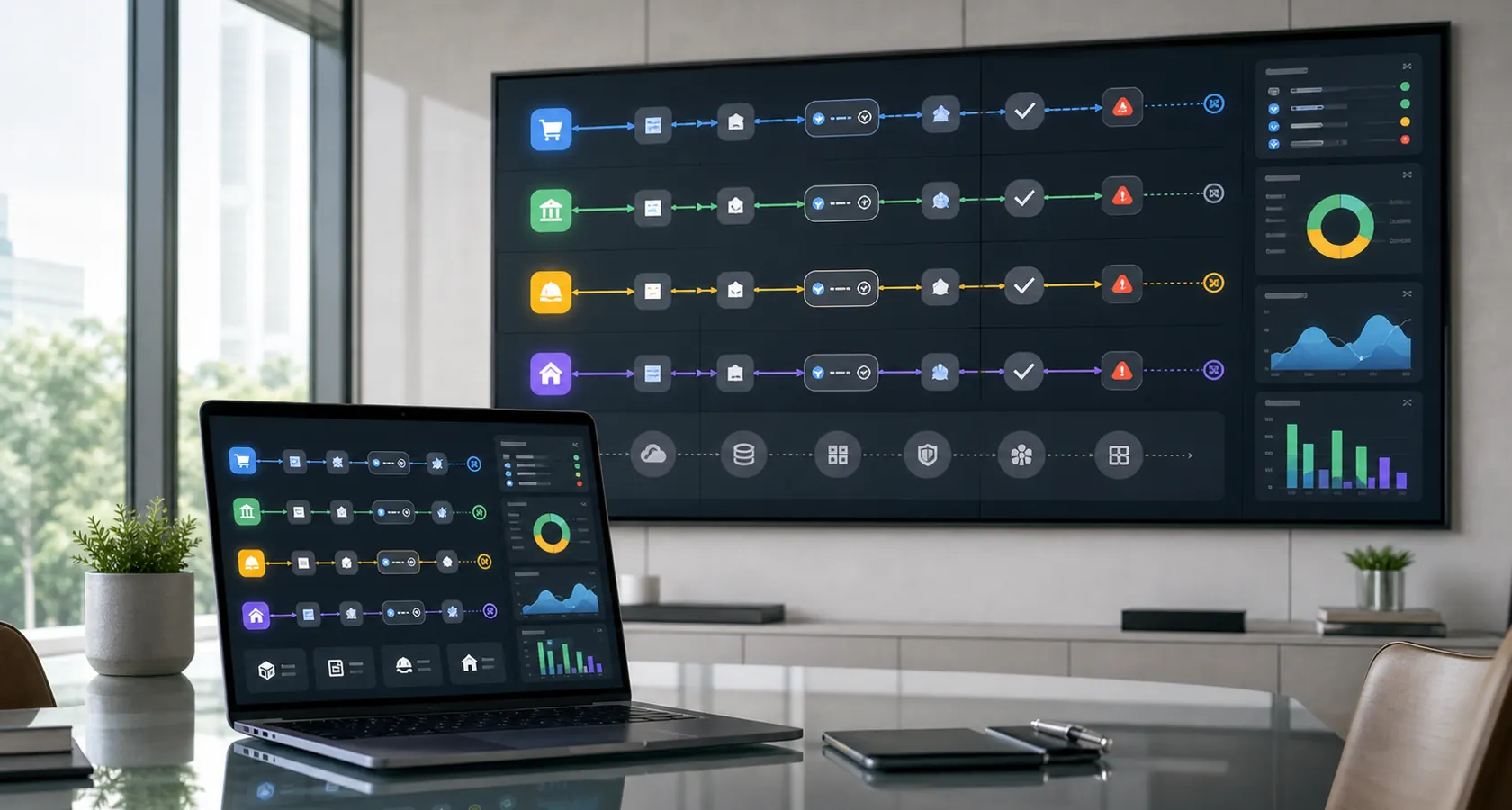
AI automation learning hub
Use these guides to move from a broad AI idea to one scoped workflow: examples, readiness, guardrails, requirements, cost, ROI, vendor review, and launch planning.
Research path
Resource pages are written for operators who need a clearer implementation path, not broad AI trend summaries.
Start with recognizable workflows so the team can see where AI helps before discussing tools or platforms.
Separate low-risk preparation work from customer, finance, legal, compliance, and record-changing actions.
Compare manual hours, cycle time, exception volume, and revenue impact against build and support cost.
Confirm owners, source systems, permissions, fallback paths, and launch metrics before production use.
Resource map
The resource library is organized around buyer decisions: what to automate, how to control it, whether it is ready to build, and how the budget should be justified.
Use the roadmap, workflow mapping, use case inventory, and prioritization guides to choose one process worth automating first.
Review approval matrices, governance checklists, permission rules, audit logs, incident handling, and fallback planning before launch.
Turn the selected workflow into requirements, a pilot plan, acceptance criteria, production readiness checks, and a measured rollout.
Compare pilot cost, consultant pricing, implementation budgets, KPI dashboards, ROI reports, and payback assumptions.
Resources
Educational pages for operators researching AI workflow examples, implementation readiness, human approval, vendor review, pricing, and ROI before choosing a pilot.
Learn what AI workflow automation is, how it works in business operations, which workflows to automate first, what guardrails are needed, and how ROI is measured.
Automation roadmapAI Automation RoadmapAI automation roadmap guide for choosing the first workflow, sequencing pilots, defining guardrails, estimating ROI, and planning implementation.
Use case inventoryAI Use Case Inventory TemplateAI use case inventory template for tracking employee AI tools, workflow candidates, owners, data risk, approvals, vendors, status, ROI, and governance review.
Model inventoryAI Model Inventory TemplateAI model inventory template for tracking models, AI agents, vendors, versions, owners, data access, evaluations, monitoring, incidents, and retirement.
Governance checklistAI Governance ChecklistAI governance checklist for policies, use case inventory, model inventory, impact assessment, risk controls, human review, vendor due diligence, and monitoring.
Prioritization matrixAI Automation Prioritization MatrixAI automation prioritization matrix for scoring use cases by ROI, data readiness, risk, integration effort, owner clarity, volume, and pilot speed.
Workflow mappingAI Automation Workflow Mapping TemplateAI automation workflow mapping template for documenting owners, inputs, systems, handoffs, exceptions, approval risks, ROI metrics, and first pilot candidates.
Readiness checklistAI Automation Readiness ChecklistAI automation readiness checklist for scoring workflow fit, data access, approvals, integration effort, risk, ROI baseline, support capacity, and pilot fit.
Audit checklistAI Automation Audit ChecklistAI automation audit checklist for reviewing workflows, opportunities, data access, approval risks, guardrails, ROI baselines, and first-pilot readiness.
Data readinessAI Automation Data Readiness ChecklistAI automation data readiness checklist for source systems, sample records, permissions, data quality, missing fields, sensitive data, and pilot scope.
Integration requirementsAI Automation Integration Requirements ChecklistAI automation integration requirements checklist for CRM, ERP, inbox, API, webhook, permissions, write-back limits, failure handling, logs, and pilot scope.
Discovery questionsAI Automation Discovery QuestionsAI automation discovery questions for scoping the first workflow, systems, data access, approvals, integrations, ROI metrics, risks, and vendor readiness.
Consulting checklistAI Automation Consulting ChecklistAI automation consulting checklist for preparing workflows, data access, approval rules, ROI goals, pricing questions, vendor fit, and launch support.
Choose consultantHow to Choose an AI Workflow Automation ConsultantBuyer guide for choosing an AI workflow automation consultant: questions to ask, proposal red flags, guardrail proof, pricing clarity, implementation depth, and ROI evidence.
Requirements checklistAI Automation Requirements ChecklistAI automation requirements checklist for defining workflow scope, systems, data access, agent roles, approvals, integrations, ROI metrics, and vendor scope.
Security checklistAI Automation Security ChecklistAI automation security checklist for data access, approvals, permissions, audit logs, vendor risk, human review, and safe AI agent workflow launches.
Agent securityAI Agent Security ChecklistAI agent security checklist for identity, access control, tool use, prompt injection, data leakage, human approval, audit logs, testing, and incidents.
Threat modelingAI Agent Threat Modeling ChecklistAI agent threat modeling checklist for users, data flows, tools, permissions, prompt injection, data leakage, approval bypass, monitoring, and incidents.
Red teamingAI Agent Red Teaming ChecklistAI agent red teaming checklist for prompt injection, tool misuse, data leakage, access control, memory, handoffs, logs, rollback, and launch signoff.
Agent guardrailsAI Agent Guardrails ChecklistAI agent guardrails checklist for allowed actions, blocked actions, human review, tool permissions, source evidence, fallback paths, logs, and monitoring.
Prompt injectionAI Agent Prompt Injection ChecklistAI agent prompt injection checklist for untrusted content, tool calls, data exposure, approval gates, isolation, logging, testing, and safe fallback.
Data leakageAI Agent Data Leakage ChecklistAI agent data leakage checklist for sensitive data, data minimization, tool outputs, prompts, memory, logs, recipients, redaction, and human review.
Agent governanceAI Agent Governance FrameworkAI agent governance framework for owners, approved use cases, permissions, human review, audit logs, monitoring, incidents, vendors, and expansion gates.
Governance policyAI Automation Governance Policy TemplateAI automation governance policy template for defining approved use cases, data access, human review, audit logs, vendor controls, and expansion rules.
Acceptable useAI Acceptable Use Policy TemplateAI acceptable use policy template for employee AI tools, approved use cases, sensitive data, human review, vendor rules, shadow AI, and audit evidence.
Agent complianceAI Agent Compliance ChecklistAI agent compliance checklist for reviewing use cases, data handling, human oversight, audit logs, vendor controls, monitoring, incidents, and expansion risk.
Impact assessmentAI Impact Assessment TemplateAI impact assessment template for affected users, data sensitivity, customer impact, fairness, human review, vendor risk, mitigations, and approval evidence.
Risk assessmentAI Agent Risk Assessment TemplateAI agent risk assessment template for scoring workflow risk, data access, tool permissions, human approval, vendor controls, security, and launch readiness.
Risk registerAI Agent Risk Register TemplateAI agent risk register template for tracking owners, controls, residual risk, mitigation status, evidence, incidents, review dates, and expansion decisions.
Access controlAI Agent Access Control ChecklistAI agent access control checklist for identity, service accounts, least privilege, tool permissions, approval gates, revocation, audit logs, and access reviews.
Tool use policyAI Agent Tool Use Policy TemplateAI agent tool use policy template for approved tools, blocked actions, permissions, human approval, prompt injection, audit logs, testing, and change control.
Permission matrixAI Agent Permission Matrix TemplateAI agent permission matrix template for defining read, write, send, approve, delete, payment, tool, data, service account, and access review controls.
Approval matrixAI Automation Approval Matrix TemplateAI automation approval matrix template for deciding which AI outputs need human review, escalation, audit logs, confidence checks, and owner signoff.
Exception handlingAI Automation Exception Handling ChecklistAI automation exception handling checklist for missing data, low confidence, approval rejection, system failures, fallback paths, audit logs, and monitoring.
Audit logsAI Agent Audit Log RequirementsAI agent audit log requirements for tracking prompts, source data, tool calls, approvals, exceptions, outputs, reviewer actions, and workflow changes.
Incident responseAI Agent Incident Response PlanAI agent incident response plan for stopping unsafe automations, revoking access, reviewing logs, notifying owners, rollback, and safe relaunch.
Rollback planAI Agent Rollback Plan TemplateAI agent rollback plan template for pausing automations, restoring prompts, reverting permissions, correcting records, notifying owners, and safe relaunch.
Agent testingAI Agent Testing ChecklistAI agent testing checklist for validating prompts, tool calls, edge cases, approval rules, fallback paths, audit logs, permissions, and launch readiness.
Agent deploymentAI Agent Deployment ChecklistAI agent deployment checklist for production launch, approvals, permissions, monitoring, rollback, support, audit logs, incidents, and go-live readiness.
Agent evaluationAI Agent Evaluation ChecklistAI agent evaluation checklist for scoring task success, output quality, tool use, source evidence, risk, cost, human review burden, and workflow ROI.
Agent observabilityAI Agent Observability ChecklistAI agent observability checklist for logging prompts, traces, tool calls, approvals, errors, cost, quality, drift, and ROI signals in production workflows.
Agent monitoringAI Agent Monitoring ChecklistAI agent monitoring checklist for tracking quality, exceptions, approvals, tool calls, drift, cost, user adoption, incidents, and workflow ROI after launch.
Runbook templateAI Automation Runbook TemplateAI automation runbook template for production owners, monitoring, incidents, approvals, change control, rollback, support, and ROI reporting.
Agent SOPAI Agent SOP TemplateAI agent SOP template for documenting intake, evidence checks, tool use, human review, exceptions, fallback steps, approvals, logs, and owners.
Maintenance planAI Automation Maintenance PlanAI automation maintenance plan for prompt tuning, integration checks, exception review, cost monitoring, support, change control, and ROI reporting.
KPI dashboardAI Automation KPI Dashboard TemplateAI automation KPI dashboard template for monitoring quality, exceptions, approvals, cost, adoption, support load, cycle time, and ROI after launch.
ROI reportAI Automation ROI Report TemplateAI automation ROI report template for monthly executive reporting on hours saved, cycle time, quality, exceptions, cost, adoption, and expansion.
Change controlAI Automation Change Control TemplateAI automation change control template for prompt changes, routing changes, permissions, integrations, testing, approvals, rollback, and reporting.
Vendor securityAI Vendor Security QuestionnaireAI vendor security questionnaire for evaluating AI agents, data handling, access controls, model training, audit logs, subprocessors, and incident support.
Vendor due diligenceAI Vendor Due Diligence ChecklistAI vendor due diligence checklist for reviewing data use, model training, security, permissions, subprocessors, incidents, contracts, and support.
RFP templateAI Automation RFP TemplateAI automation RFP template for comparing vendors, workflow scope, integrations, guardrails, pricing, implementation support, and ROI proof.
Procurement checklistAI Automation Procurement ChecklistAI automation procurement checklist for evaluating vendors, scope, pricing, security, data access, guardrails, contracts, support, and ROI proof.
Vendor selectionAI Automation Vendor Selection GuideAI automation vendor selection guide for comparing consultants, agencies, software, scope, pricing, guardrails, integrations, support, and ROI proof.
Proposal reviewAI Automation Proposal Review ChecklistAI automation proposal review checklist for comparing vendor quotes, workflow scope, integrations, approval guardrails, support, pricing, and ROI proof.
SOW templateAI Automation Statement of Work TemplateAI automation statement of work template for defining workflow scope, deliverables, milestones, acceptance criteria, guardrails, support, pricing, and ROI.
Acceptance criteriaAI Automation Acceptance Criteria ChecklistAI automation acceptance criteria checklist for scope, test evidence, approvals, integrations, audit logs, fallback paths, monitoring, and go-live signoff.
Support planAI Automation Support Plan TemplateAI automation support plan template for defining response times, monitoring cadence, incident handling, change control, reporting, and SLA terms.
SLA templateAI Automation SLA TemplateAI automation SLA template for defining support hours, severity levels, response times, incident escalation, monitoring, reporting, and change requests.
Business caseAI Automation Business Case TemplateAI automation business case template for proving workflow ROI, estimating pilot cost, defining guardrails, setting approval metrics, and planning expansion.
POC checklistAI Automation POC ChecklistAI automation POC checklist for choosing one workflow, defining success criteria, data access, guardrails, test cases, ROI, and go/no-go decisions.
Pilot planAI Automation Pilot Plan TemplateAI automation pilot plan template for choosing one workflow, defining scope, approvals, test cases, owners, success metrics, support, and expansion criteria.
Pilot metricsAI Automation Pilot Success MetricsAI automation pilot success metrics guide for choosing workflow KPIs, baseline data, ROI targets, exception rates, approval quality, and expansion criteria.
Automation costAI Automation CostLearn what affects AI automation cost, how to estimate consulting, pilot, integration, guardrail, and support budgets, and how to avoid overbuilding.
Workflow costAI Workflow Automation CostAI workflow automation cost guide for budgeting workflow consulting, AI agent implementation, integrations, approval guardrails, monitoring, support, and ROI payback.
Services pricingAI Automation Services PricingAI automation services pricing guide for consultations, audits, guarded pilots, integrations, agent implementation, managed support, and ROI proof.
Managed pricingAI Automation Managed Services PricingAI automation managed services pricing guide for monthly support, monitoring, prompt tuning, integration fixes, incidents, SLA terms, and ROI reporting.
Consultant costAI Automation Consultant CostAI automation consultant cost guide for workflow consultations, readiness audits, pilot scoping, implementation oversight, support, and ROI budgeting.
Implementation costAI Automation Implementation CostAI automation implementation cost guide for workflow scope, integrations, AI agent setup, approval guardrails, launch support, monitoring, and ROI.
Implementation partnerAI Automation Implementation PartnerAI automation implementation partner guide for choosing a build team, comparing scope, integrations, guardrails, launch support, managed services, and ROI.
Implementation timelineAI Automation Implementation TimelineAI automation implementation timeline for planning discovery, workflow scope, integrations, guardrails, testing, pilot launch, and post-launch optimization.
Implementation planAI Automation Implementation PlanAI automation implementation plan for workflow scope, owners, systems, integrations, guardrails, testing, rollout, support, adoption metrics, and ROI.
Rollout planAI Automation Rollout PlanAI automation rollout plan for pilot groups, launch phases, reviewer training, support paths, adoption metrics, monitoring, expansion gates, and ROI.
Change managementAI Automation Change Management PlanAI automation change management plan for workflow owners, reviewer training, rollout communications, adoption metrics, support paths, and expansion decisions.
Pilot costAI Automation Pilot CostAI automation pilot cost guide for choosing the first workflow, scoping integrations, approval guardrails, launch support, monitoring, and ROI proof.
Agency pricingAI Automation Agency PricingAI automation agency pricing guide for workflow audits, guarded pilots, integrations, AI agent implementation, monthly support, and ROI proof.
Agent costAI Agent Implementation CostAI agent implementation cost guide for workflow scope, integrations, data access, approval queues, testing, launch support, and monthly monitoring.
Automation examplesAI Workflow Automation ExamplesPractical AI workflow automation examples for finance, e-commerce, construction, real estate, support, approvals, and operations teams.
Small business examplesSmall Business AI Automation ExamplesSmall business AI automation examples for inbox triage, quote follow-up, invoice review, appointment reminders, document intake, approvals, and owner dashboards.
Small business agentsAI Agents for Small Business Workflow AutomationAI agents for small business workflow automation: how to use agents for intake, follow-up, document review, approvals, guardrails, and ROI without overbuilding.
Human approvalHuman-in-the-Loop AI AutomationHuman-in-the-loop AI automation guide for approval rules, risky actions, review queues, audit logs, exception handling, and business workflow guardrails.
ROI calculatorAI Automation ROI CalculatorAI automation ROI calculator guide with formulas for manual hours saved, cycle time, exception rate, revenue recovery, implementation cost, and payback period.
Implementation checklistAI Workflow Implementation ChecklistAI workflow implementation checklist for workflow mapping, system access, data readiness, human approvals, pilot launch, monitoring, and ROI reporting.
Definitions
Clear definitions help operators compare AI agents, workflow automation, guardrails, exception queues, system records, and ROI baselines before a pilot is scoped.
Compare options
Use these pages to compare AI workflow automation against RPA, AI agents, software, and consulting options.
Compare AI automation services vs software for workflow mapping, integrations, AI agents, approval guardrails, implementation cost, and ROI proof.
Agency vs softwareAI Automation Agency vs SoftwareCompare an AI automation agency vs software for workflow mapping, implementation, integrations, approval guardrails, support, cost, and ROI proof.
Services vs ZapierAI Automation Services vs ZapierCompare AI automation services vs Zapier for business workflows, including tool setup, custom integrations, AI agents, approvals, monitoring, and ROI.
Services vs MakeAI Automation Services vs Make.comCompare AI automation services vs Make.com for business workflows, including scenario design, integrations, AI agents, approvals, monitoring, and ROI.
Services vs Power AutomateAI Automation Services vs Microsoft Power AutomateCompare AI automation services vs Microsoft Power Automate for business workflows, integrations, AI agents, approvals, governance, support, and ROI.
Services vs UiPathAI Automation Services vs UiPathCompare AI automation services vs UiPath for business workflows, RPA, AI agents, integrations, approvals, governance, support, and ROI.
Services vs Automation AnywhereAI Automation Services vs Automation AnywhereCompare AI automation services vs Automation Anywhere for agentic process automation, RPA, AI agents, approvals, governance, support, and ROI.
Services vs WorkatoAI Automation Services vs WorkatoCompare AI automation services vs Workato for enterprise integration, iPaaS, AI agents, approvals, governance, support, implementation risk, and ROI.
Services vs ServiceNowAI Automation Services vs ServiceNowCompare AI automation services vs ServiceNow for enterprise workflows, AI agents, IT and service operations, approvals, governance, support, and ROI.
Services vs n8nAI Automation Services vs n8nCompare AI automation services vs n8n for AI workflow automation, integrations, self-hosting, approvals, support, implementation risk, and ROI.
Services vs AgentforceAI Automation Services vs Salesforce AgentforceCompare AI automation services vs Salesforce Agentforce for AI agents, CRM automation, customer workflows, approvals, support, and ROI.
Services vs HubSpotAI Automation Services vs HubSpotCompare AI automation services vs HubSpot for CRM automation, marketing workflows, sales follow-up, AI agents, approvals, support, and ROI.
Services vs PegaAI Automation Services vs PegaCompare AI automation services vs Pega for enterprise process automation, workflows, case management, approvals, implementation support, and ROI.
AI vs RPAAI Workflow Automation vs RPACompare AI workflow automation vs RPA for business operations, including use cases, data needs, exception handling, human approvals, ROI, and implementation risk.
Agents vs workflowsAI Agents vs Workflow AutomationCompare AI agents vs workflow automation for business operations, including agent roles, orchestration, approvals, integrations, monitoring, and ROI.
Agents vs chatbotsAI Agents vs ChatbotsCompare AI agents vs chatbots for business workflows, support automation, tool use, human approval, integrations, monitoring, and ROI.
Consultant vs agencyAI Automation Consultant vs AgencyCompare an AI automation consultant vs agency for workflow strategy, tool selection, implementation support, guardrails, ROI, and ongoing optimization.
Consultant vs softwareAI Automation Consultant vs SoftwareCompare hiring an AI automation consultant vs buying software for workflow mapping, integrations, AI agents, approval guardrails, ROI reporting, and ongoing optimization.
Services
When a guide turns into an implementation question, these service pages explain the next step.
AI automation services for businesses that need workflow mapping, AI agent implementation, integrations, human approval guardrails, and ROI tracking.
Operations consultingAI Operations Automation ConsultingAI operations automation consulting for business teams that need intake routing, approvals, system handoffs, reporting, and measurable ROI.
Automation for businessAI Automation for BusinessAI automation for business teams that need practical workflow use cases, agent implementation, human approval guardrails, integrations, and measurable ROI.
Custom AI automationCustom AI Automation ServicesCustom AI automation services for business workflows, AI agents, integrations, approval guardrails, launch support, monitoring, and ROI.
FAQ
Use these answers to choose the right guide, checklist, template, or next step before scoping a pilot.
Start with the roadmap if you need sequence, the readiness checklist if you are unsure whether a workflow is ready, and the ROI or pricing guides when budget and payback are the main question.
They are written for planning implementation. The guides help map workflows, define approval guardrails, estimate ROI, prepare requirements, review vendors, and decide whether a pilot is ready.
Use them to turn a broad AI idea into one documented workflow: owner, inputs, systems, risks, approval rules, baseline metrics, rollout plan, and acceptance criteria.
Move to a consultation or audit when a workflow has enough volume and pain to matter, but the team still needs help with scope, data readiness, integrations, risk, cost, or ROI assumptions.
From research to scope
The strongest next step is choosing one repeated workflow, mapping the risk boundary, and estimating whether the pilot can pay for itself.