Faster service advisor intake.
Use this signal to validate whether the workflow improved after a guarded pilot.
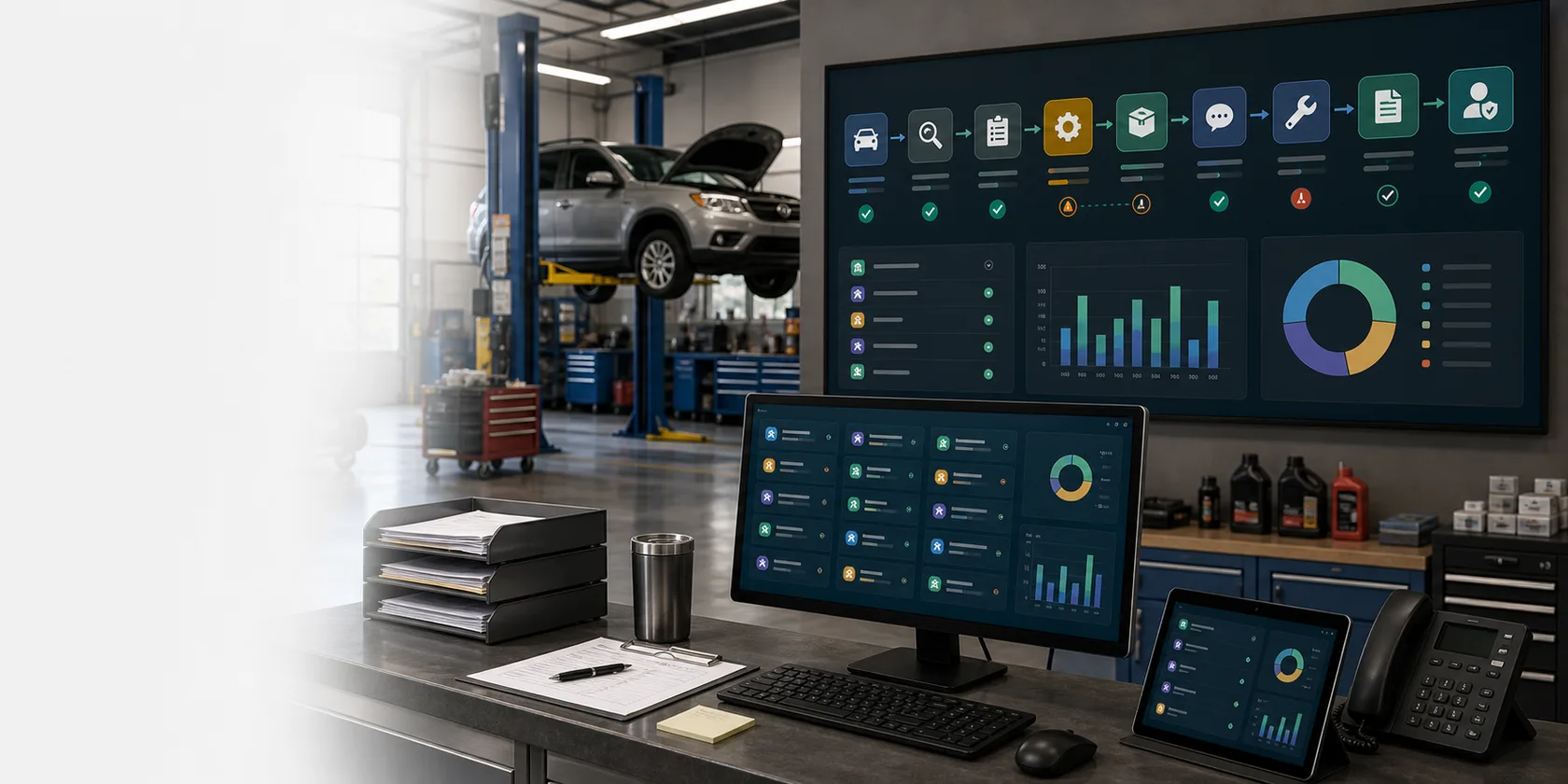
Auto Repair Shops case playbook
Service advisor workflow that moves intake, estimates, and closeout before work stalls.
Representative playbook
This case study is a representative workflow playbook, not a fabricated client claim. It shows how a buyer can scope the workflow before committing to implementation.
Workflow breakdown
The right first pilot should make the workflow easier to review, not harder to trust.
Problem: Repair shops juggle calls, inspection notes, photos, parts updates, technician status, estimates, customer approvals, and invoice handoff while trying to keep bays productive.
Automation: AI classifies intake, attaches vehicle and service context, prepares repair order tasks, drafts estimate approval follow-ups, and routes customer-impacting decisions for review.
Guardrail: Estimate changes, parts commitments, warranty decisions, discounts, safety language, and customer-sensitive messages remain service advisor or manager-approved.
Outcome signals
A useful case study should name the operating signals to monitor before and after launch.
Use this signal to validate whether the workflow improved after a guarded pilot.
Use this signal to validate whether the workflow improved after a guarded pilot.
Use this signal to validate whether the workflow improved after a guarded pilot.
FAQ
A representative case study is useful only when the approval boundary, workflow volume, and measurable signals fit the real operation.
No. This is a representative auto repair shops workflow playbook, not a fabricated client claim. It shows the pain, automation path, approval guardrail, and ROI signals to validate before implementation.
Confirm workflow volume, current systems, owner responsibilities, approval boundaries, exception patterns, and baseline metrics before building a guarded AI pilot.
Estimate changes, parts commitments, warranty decisions, discounts, safety language, and customer-sensitive messages remain service advisor or manager-approved. Risky customer, financial, legal, operational, or brand-sensitive actions should stay reviewed until the workflow proves reliable.
Track faster service advisor intake., cleaner estimate approval and declined-work queues., more consistent customer updates and job closeout. before and after launch so the pilot is judged by measurable operating improvement.
Services
Connect the case study to workflow consulting, guarded implementation, approval controls, and ROI validation before building.
AI workflow automation consulting for businesses that need workflow mapping, AI agent implementation, human approval guardrails, and measurable ROI reporting.
Workflow implementationAI Workflow Automation ImplementationAI workflow automation implementation for businesses ready to turn one mapped workflow into AI agents, integrations, approval queues, launch support, and ROI reporting.
Automation guardrailsAI Automation GuardrailsDesign AI automation guardrails for business workflows with approval rules, source evidence, audit logs, permissions, fallback handling, and exception queues.
ROI auditAI Workflow ROI AuditAI workflow ROI audit for businesses that need to identify the first automation pilot, estimate value, rank workflows, and avoid low-ROI AI projects.
Next step
We will compare this playbook to your actual systems, owners, approval risks, and measurable baseline.