What is the best AI automation example for a small business?
The best first example is usually inbox triage, lead follow-up, quote follow-up, invoice intake, or appointment reminders because the workflow is repeated, visible, and easy to measure.
AI automation resource
Small business AI automation examples for inbox triage, quote follow-up, invoice review, appointment reminders, document intake, approvals, and owner dashboards.
Search intent
Small businesses usually get the fastest AI automation value from repeated admin work that delays revenue, customer response, billing, or approvals. The right first project is narrow, measurable, and easy for the owner to review.
Guide sections
These resources support buyers who are still comparing examples, controls, ROI, and implementation readiness.
AI classifies shared inbox messages, identifies new leads or urgent customer issues, drafts replies, and routes anything sensitive to the owner before sending.
AI watches open quotes, drafts follow-up messages, summarizes buyer objections, and reminds the team when a revenue opportunity is going stale.
AI extracts vendor, customer, invoice, receipt, or form details, checks for missing fields, and prepares review packets before bookkeeping or system updates.
AI gathers risky actions into one queue so payments, refunds, customer-sensitive replies, discounts, and record changes stay human-approved.
AI enriches form submissions, scores urgency, drafts the next touch, and creates CRM tasks so new opportunities do not sit unanswered.
AI tags repetitive tickets, attaches customer and order context, drafts approved replies, and escalates refunds, complaints, or account-sensitive issues.
AI prepares confirmation, reschedule, and no-show recovery messages while staff review sensitive scheduling, payment, or policy exceptions.
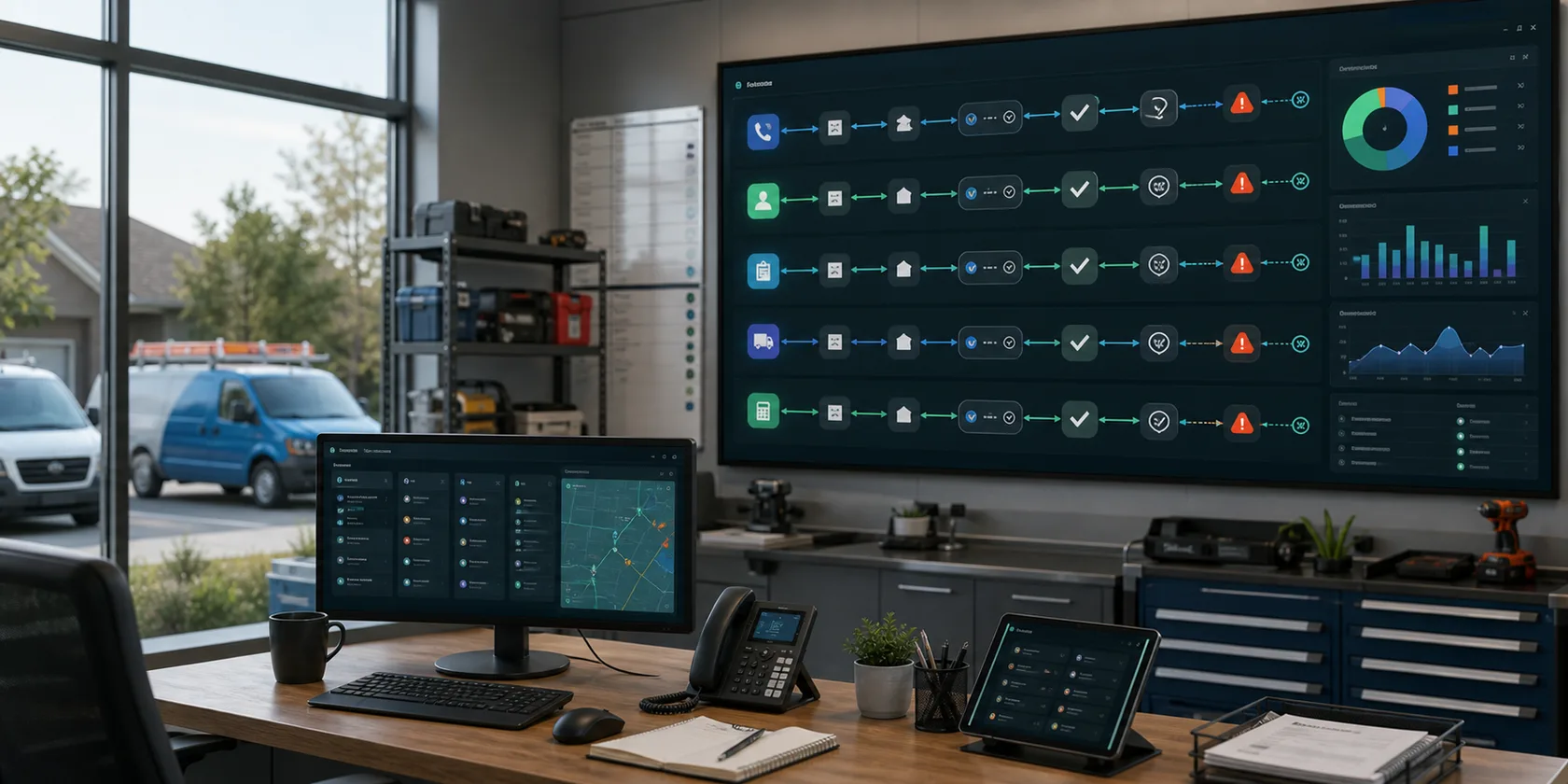
AI turns calls, forms, and technician notes into dispatch packets with location, urgency, customer history, parts, and reviewed customer updates.
AI tracks missing client files, drafts reminders, extracts fields, and routes incomplete or sensitive packets to the responsible reviewer.
AI automation works best when the first project has a clear owner, repeated volume, accessible records, approval rules, and measurable ROI.
Checklist
A useful resource page should help the buyer make a better decision before they contact anyone.
FAQ
Short answers for teams researching AI workflow automation before choosing a pilot.
The best first example is usually inbox triage, lead follow-up, quote follow-up, invoice intake, or appointment reminders because the workflow is repeated, visible, and easy to measure.
Use simple automation for stable rules and AI when the workflow depends on messy emails, documents, customer language, or exception judgment.
Keep AI in preparation mode first: draft, classify, summarize, extract, and route work while a person approves payments, refunds, discounts, customer-sensitive messages, and record changes.
Next step
We will help identify the workflow, approval boundary, data sources, and ROI model that make sense for a first pilot.