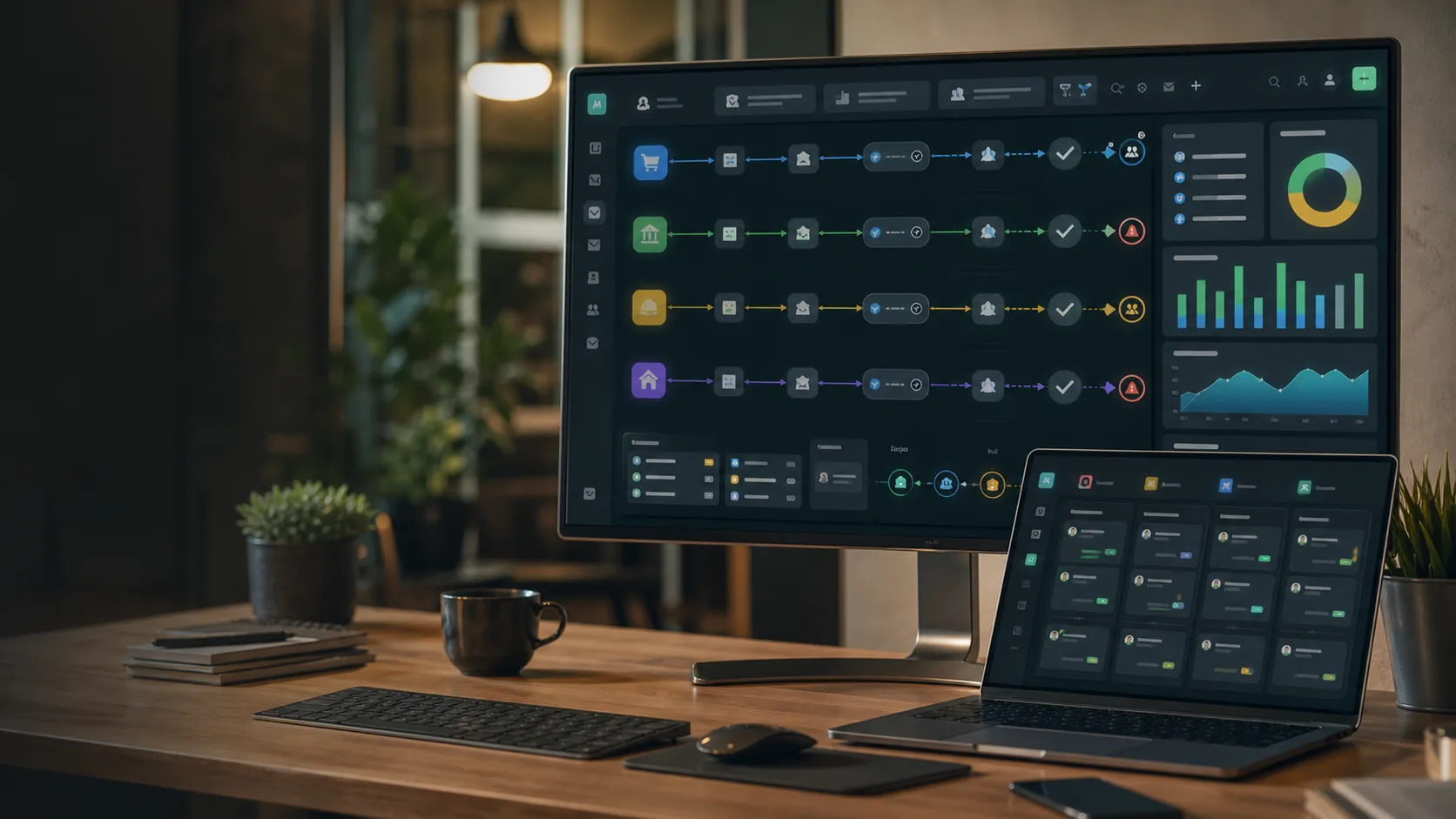
Campaign workflow map
Define campaign sources, request forms, audience segments, owners, messaging rules, approval paths, CRM stages, attribution fields, and launch handoffs.
AI automation service
AI marketing automation services for campaign intake, audience routing, content drafts, lead handoffs, approvals, CRM updates, and ROI reporting.
Buyer intent
Marketing work slows down when campaign requests, audience lists, creative briefs, email drafts, landing-page changes, lead source data, sales feedback, compliance review, and CRM follow-up live across disconnected tools. Teams lose pipeline when messages wait for context, approvals, handoffs, or reporting.
Deliverables
Every engagement is scoped around concrete work products, clear owners, and decisions your team can review.
Define campaign sources, request forms, audience segments, owners, messaging rules, approval paths, CRM stages, attribution fields, and launch handoffs.
Prepare segment notes, customer context, offer rules, source evidence, prior campaign lessons, missing details, and sales handoff requirements.
Create review-ready email, SMS, ad, landing-page, social, and sales enablement drafts while routing risky claims or brand-sensitive language.
Prepare campaign tasks, lead source updates, nurture follow-up queues, pipeline handoffs, attribution checks, and dashboards for response and conversion.
Implementation path
Each service starts with the workflow, then narrows into data, approvals, implementation, and measurement.
Choose one campaign queue: Start with one repeated queue such as inbound campaign requests, lead nurture, event follow-up, newsletter production, win-back campaigns, or sales enablement.
Connect marketing context: Use least-privilege access to CRM, marketing automation tools, email, forms, calendars, analytics, approved copy libraries, and prior campaign records.
Set brand guardrails: Hold claims, testimonials, pricing, discounts, regulated language, competitor references, customer data, and high-value account messaging for review.
Measure campaign movement: Track request cycle time, draft acceptance, approval latency, follow-up coverage, lead response, conversion movement, and staff time removed.
Buyer checks
High-intent buyers should be able to compare scope, pricing, guardrails, and risk language before booking or approving implementation.
Before buying AI marketing automation services, confirm the exact workflow, owner, source systems, sample records, manual volume, and approval risk.
Separate consultation, audit, implementation, integrations, software, managed support, and change-request cost before comparing proposals.
Require allowed actions, blocked actions, approval-required decisions, source evidence, fallback paths, and audit logs before production launch.
Compare the proposal language against public AI risk, security, and implementation references without treating them as a substitute for expert review.
Fit and proof
Use these signals to decide whether a workflow has enough value, repeatability, and control points to automate.
The team repeats campaign, nurture, content, lead handoff, or CRM update work and needs faster execution with brand and approval controls.
Campaign volume is low, brand rules are undocumented, offer owners are unclear, or the team wants AI to publish customer-facing campaigns without review.
Campaign requests move faster, drafts are easier to review, sales receives cleaner lead context, and risky messaging stays approval-gated.
FAQ
Short answers for buyers comparing AI automation options, risk, and implementation scope.
AI marketing automation services help teams organize campaign intake, prepare audience context, draft review-ready content, route approvals, update CRM or marketing systems, and measure campaign ROI.
AI can prepare drafts, packets, and routine handoffs, but claims, pricing, discounts, testimonials, regulated language, high-value accounts, and brand-sensitive campaigns should require review.
Good candidates include campaign intake, email nurture drafts, event follow-up, newsletter production, lead source cleanup, win-back campaigns, content repurposing, and sales enablement handoffs.
Measure campaign request cycle time, draft acceptance, approval latency, launch throughput, lead follow-up coverage, conversion movement, attribution quality, and staff time removed.
Decision support
Buyers can compare how the work is planned, priced, governed, and started before booking a consultation.
Workflow guides
Matched workflow pages help buyers see where this service turns into practical implementation.
Build sales lead follow-up AI workflow automation for lead capture, CRM enrichment, scoring, reply drafts, meeting handoffs, approval guardrails, and ROI reporting.
Auto DealershipsAuto Dealership Lead Response AI Workflow AutomationBuild auto dealership lead response AI workflow automation for internet leads, BDC follow-up, CRM notes, appointment recovery, trade-in inquiries, consent checks, and ROI reporting.
Email OperationsAI Email Workflow AutomationBuild AI email workflow automation for shared inbox triage, message classification, attachment context, reply drafts, owner routing, approval guardrails, and SLA reporting.
RestaurantsRestaurant Catering Inquiry AI Workflow AutomationBuild restaurant catering inquiry AI workflow automation for event requests, guest counts, menu questions, delivery details, deposit tasks, manager approval, and ROI reporting.
Start scoped
The strongest first step is a narrow workflow with clear owners, accessible data, approval rules, and a measurable ROI baseline.