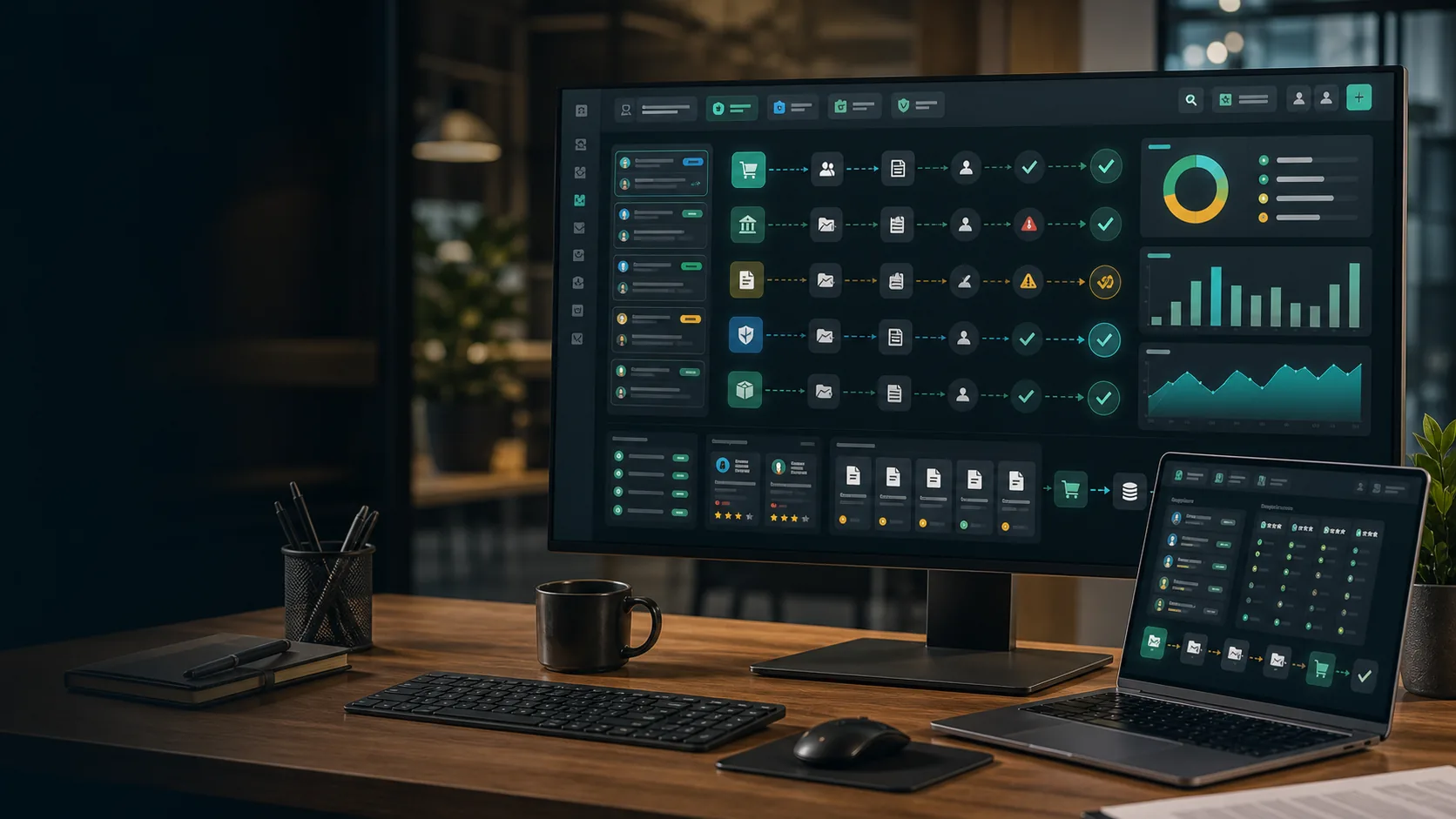
Procurement workflow map
Define request sources, spend categories, vendor records, quote requirements, budget owners, approval rules, PO handoffs, exception paths, and the system of record.
AI automation service
AI procurement automation services for purchase requests, vendor intake, quote comparison, approval routing, PO handoffs, audit logs, and ROI reporting.
Buyer intent
Procurement work slows down when purchase requests, vendor emails, quote attachments, budget context, contract terms, approval rules, supplier records, and ERP or purchasing-system updates live across disconnected tools. Teams lose time chasing missing fields, comparing quotes, routing approvals, and preparing PO handoffs.
Deliverables
Every engagement is scoped around concrete work products, clear owners, and decisions your team can review.
Define request sources, spend categories, vendor records, quote requirements, budget owners, approval rules, PO handoffs, exception paths, and the system of record.
Prepare supplier context, quote comparison notes, contract attachments, required fields, risk flags, renewal timing, and missing-information requests.
Route budget exceptions, new vendors, contract language, price changes, urgent purchases, sole-source requests, and high-value approvals to the mapped reviewer.
Prepare ERP or purchasing-system handoffs, buyer tasks, supplier follow-up drafts, audit logs, cycle-time dashboards, and staff-effort reporting.
Implementation path
Each service starts with the workflow, then narrows into data, approvals, implementation, and measurement.
Choose one purchasing queue: Start with one repeated queue such as purchase requests, vendor onboarding, quote comparison, recurring renewals, PO creation, supplier follow-up, or budget approvals.
Connect procurement context: Use least-privilege access to email, forms, ERP, procurement tools, vendor records, contract storage, budgets, approval matrices, and purchasing history.
Set spend guardrails: Hold budget exceptions, new suppliers, contract terms, legal-sensitive clauses, sole-source decisions, price increases, and PO release for review.
Measure request movement: Track request completeness, quote comparison time, approval latency, PO handoff speed, supplier follow-up coverage, exception rate, and manual touches removed.
Buyer checks
High-intent buyers should be able to compare scope, pricing, guardrails, and risk language before booking or approving implementation.
Before buying AI procurement automation services, confirm the exact workflow, owner, source systems, sample records, manual volume, and approval risk.
Separate consultation, audit, implementation, integrations, software, managed support, and change-request cost before comparing proposals.
Require allowed actions, blocked actions, approval-required decisions, source evidence, fallback paths, and audit logs before production launch.
Compare the proposal language against public AI risk, security, and implementation references without treating them as a substitute for expert review.
Fit and proof
Use these signals to decide whether a workflow has enough value, repeatability, and control points to automate.
The team receives repeated purchasing requests and spends time collecting missing details, comparing quotes, checking vendors, routing approvals, and preparing PO handoffs.
Purchase volume is low, vendor records are unreliable, approval authority is unclear, policy rules are undocumented, or the business wants AI to commit spend without review.
Purchase packets reach reviewers faster, supplier follow-up is consistent, PO handoffs need fewer corrections, and spend-sensitive decisions stay approval-gated.
FAQ
Short answers for buyers comparing AI automation options, risk, and implementation scope.
AI procurement automation services help teams classify purchase requests, gather vendor context, compare quote packets, route approvals, prepare PO handoffs, and measure purchasing cycle time with review controls.
AI can prepare approval packets and routine handoffs, but new vendors, budget exceptions, contract terms, sole-source decisions, high-value requests, and PO release should remain human-approved.
Good candidates include purchase request intake, vendor onboarding, quote comparison, contract packet prep, recurring renewals, PO handoffs, supplier follow-up, and budget approval routing.
Measure request completion, quote comparison time, approval latency, PO handoff speed, supplier follow-up coverage, exception rate, avoided rework, and staff time removed.
Decision support
Buyers can compare how the work is planned, priced, governed, and started before booking a consultation.
Workflow guides
Matched workflow pages help buyers see where this service turns into practical implementation.
Build wholesale distributor inventory replenishment and purchasing AI workflow automation for low-stock signals, demand review, backorders, vendor purchase orders, supplier delays, receiving exceptions, and approval guardrails.
MSP / IT ServicesMSP Client Onboarding, Quote, and Billing AI Workflow AutomationBuild MSP client onboarding, quote, renewal, and billing AI workflow automation for access tasks, device setup, hardware orders, QBR notes, procurement, invoices, account review, and ROI reporting.
Wholesale DistributorsSales Order AI AutomationBuild wholesale distributor sales order and quote AI workflow automation for customer emails, quote requests, SKU availability, pricing checks, credit holds, ERP order drafts, and reviewed acknowledgments.
Insurance AgenciesInsurance Agency Renewal, Remarketing, and Submission AI Workflow AutomationBuild insurance agency renewal, remarketing, and submission AI workflow automation for expiring policies, loss runs, applications, carrier submissions, quote comparison, proposal prep, and producer review.
Start scoped
The strongest first step is a narrow workflow with clear owners, accessible data, approval rules, and a measurable ROI baseline.