What is AI agent observability?
AI agent observability is the ability to inspect prompts, source context, tool calls, approvals, errors, cost, quality, and business impact after an agent runs inside a workflow.
AI automation resource
AI agent observability checklist for logging prompts, traces, tool calls, approvals, errors, cost, quality, drift, and ROI signals in production workflows.
Search intent
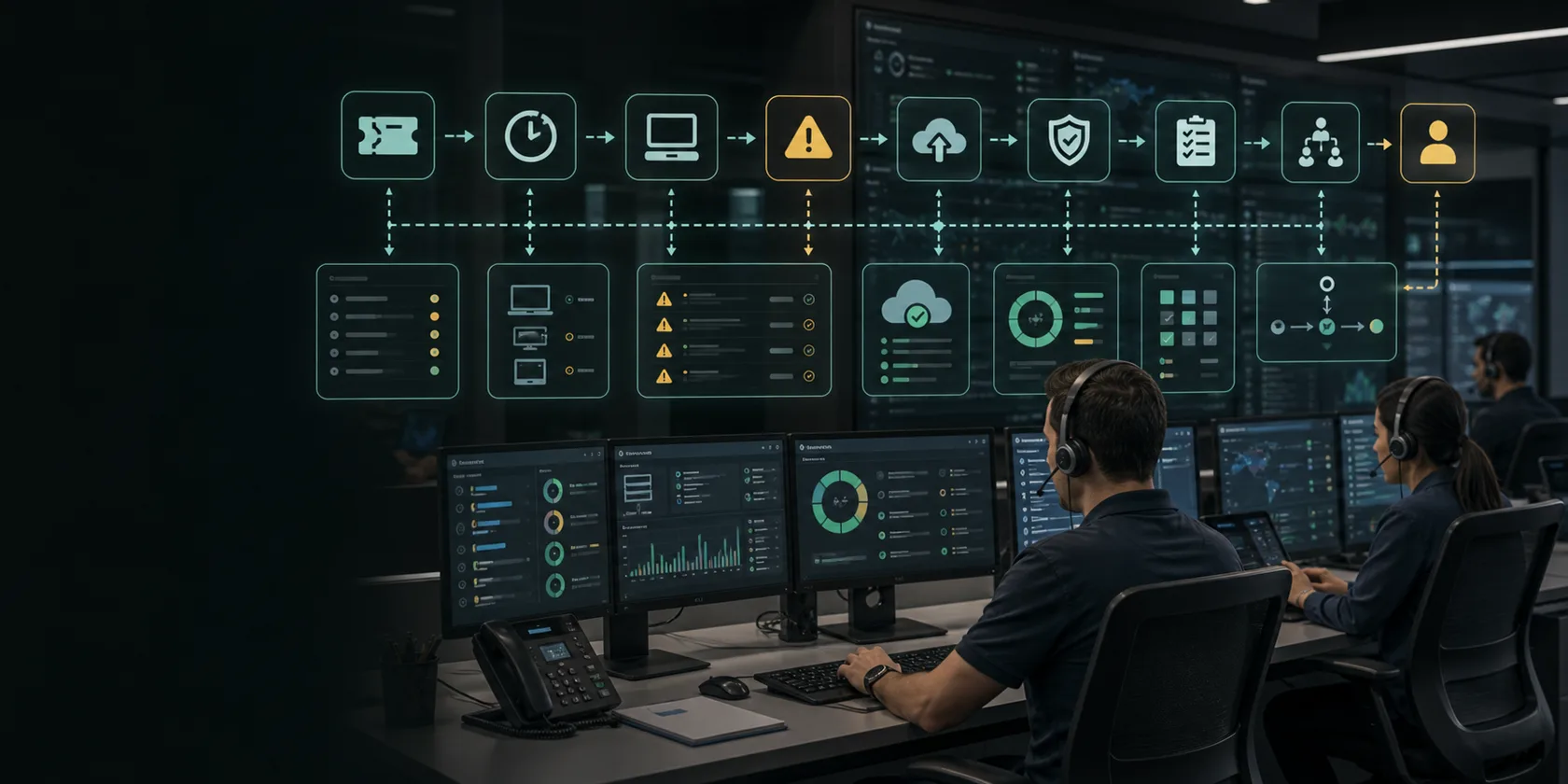
AI agent observability makes production automation inspectable. A team should be able to see prompts, source context, retrieval, tool calls, approvals, errors, retries, cost, latency, quality, exceptions, incidents, and business impact before expanding an agent.
Guide sections
These resources support buyers who are still comparing examples, controls, ROI, and implementation readiness.
Capture prompt version, source context, retrieved records, policy rules, confidence signals, and final output for each workflow item.
Track every read, write, send, retry, failure, permission denial, timeout, changed record, and blocked action by system.
Measure accepted outputs, reviewer edits, rejections, low-confidence cases, fallback use, and repeated exception reasons.
Show which reviewer saw which source evidence, what they approved, what they changed, and why they overrode the agent.
Alert on unsafe messages, approval bypass, data exposure, wrong-record changes, unusual cost spikes, and repeated failures.
Compare token cost, tool cost, reviewer effort, cycle time, exception rate, adoption, and workflow value against the baseline.
Assign who reviews signals, fixes prompts, repairs integrations, updates guardrails, and decides whether the workflow can expand.
Checklist
A useful resource page should help the buyer make a better decision before they contact anyone.
FAQ
Short answers for teams researching AI workflow automation before choosing a pilot.
AI agent observability is the ability to inspect prompts, source context, tool calls, approvals, errors, cost, quality, and business impact after an agent runs inside a workflow.
Audit logging records what happened. Observability turns logs into operating signals so teams can detect failures, tune prompts, monitor cost, improve quality, and decide whether to expand.
It should include prompt traces, source evidence, tool telemetry, approval evidence, errors, retries, latency, cost, quality signals, incident triggers, and ROI metrics.
Next step
We will help identify the workflow, approval boundary, data sources, and ROI model that make sense for a first pilot.