What should an AI automation change control template include?
It should include change categories, request intake, approval owners, test evidence, release windows, rollback plans, SLA boundaries, post-release monitoring, and reporting expectations.
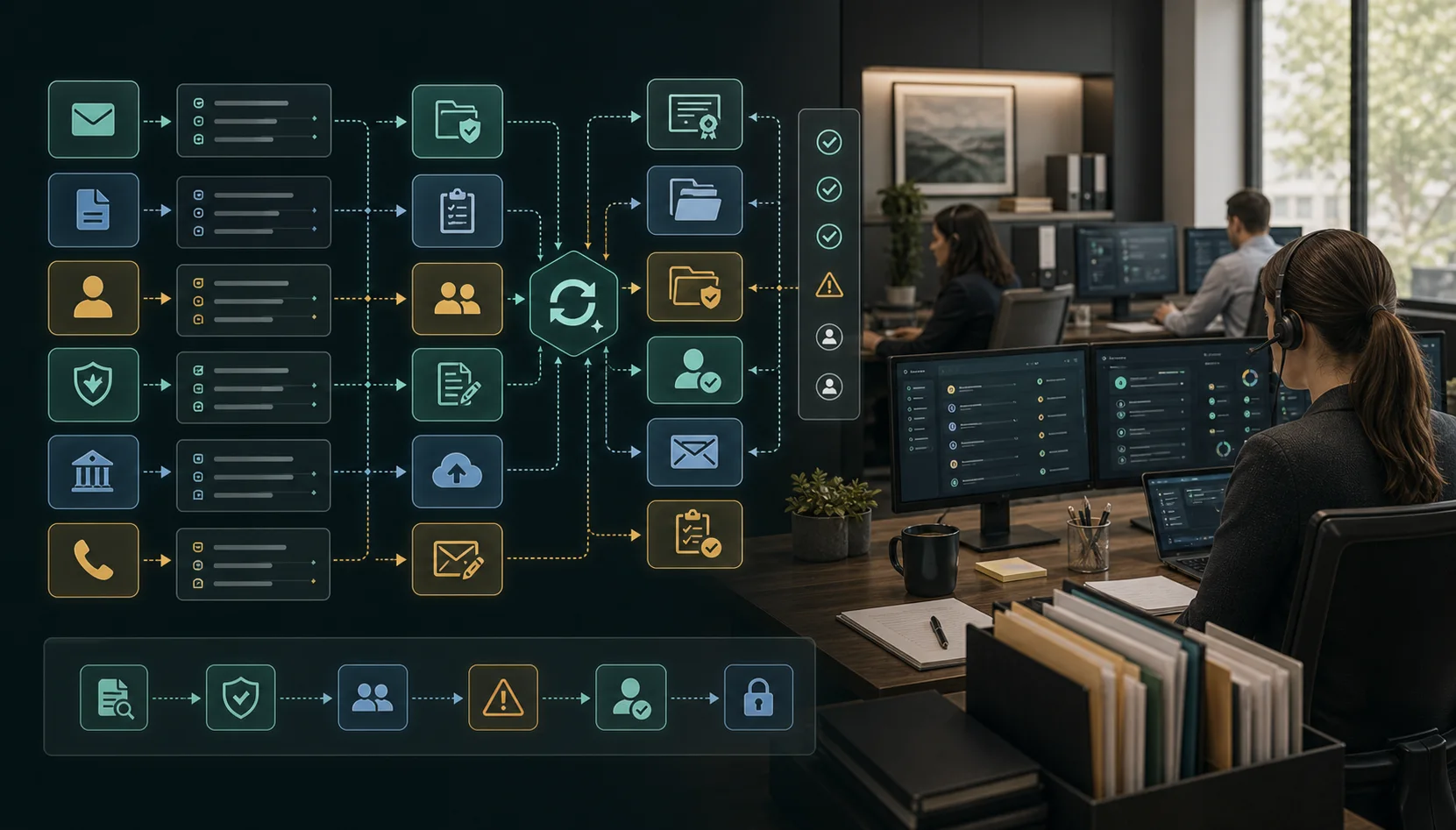
AI automation resource
AI automation change control template for prompt changes, routing changes, permissions, integrations, testing, approvals, rollback, and reporting.
Search intent
AI automation change control keeps a live workflow from drifting after launch. The template should define which changes are allowed, who approves them, how prompts and permissions are tested, when integrations can be updated, which changes require rollback plans, and how support teams report the effect of each release.
Guide sections
These resources support buyers who are still comparing examples, controls, ROI, and implementation readiness.
Separate prompt edits, routing updates, approval-rule changes, permission changes, integration fixes, dashboard edits, reporting changes, and scope expansion.
Require each request to name the workflow, requester, business reason, affected users, risk level, expected impact, and urgency.
Define which changes need workflow owner, technical owner, reviewer lead, security, compliance, finance, or vendor approval before release.
Run golden examples, edge cases, low-confidence cases, permission-denied cases, and regression checks before releasing a workflow change.
Decide when the change ships, who monitors the first runs, what alert thresholds apply, and how users are told what changed.
Document how to restore the prior prompt, route, permission set, integration version, threshold, report, or manual workflow path.
Mark whether the change is included support, managed optimization, emergency work, a billable request, or a new implementation scope.
Compare corrections, exceptions, approval latency, cost, support tickets, adoption, and ROI before calling the change successful.
Checklist
A useful resource page should help the buyer make a better decision before they contact anyone.
FAQ
Short answers for teams researching AI workflow automation before choosing a pilot.
It should include change categories, request intake, approval owners, test evidence, release windows, rollback plans, SLA boundaries, post-release monitoring, and reporting expectations.
Prompt changes, routing changes, permission changes, approval-rule changes, integrations, reporting changes, expansion requests, and any customer, financial, compliance, or record-changing behavior should have named approval.
Change management prepares people to adopt the workflow. Change control governs production changes to prompts, permissions, integrations, routes, thresholds, reports, and expansion scope after launch.
Next step
We will help identify the workflow, approval boundary, data sources, and ROI model that make sense for a first pilot.